Early Signs of Perimenopause Women Ignore
And What Your Body Is Really Telling You You didn’t plan for it. It didn’t come with a warning label.



Adaptogens and functional mushrooms are two of the most researched natural compounds used to support stress resilience, cognitive performance, immune balance, and overall vitality.
While they are often mentioned together, they are not the same. Adaptogens are primarily plant-based botanicals that help regulate the body’s stress response, while functional mushrooms contain bioactive compounds that influence immune signaling, brain health, and cellular resilience.
Understanding the difference between adaptogens and functional mushrooms — and how they work together — can help you make informed, evidence-based decisions about supplementation.
Adaptogens are natural herbs and botanicals that help the body adapt to stress and restore balance. They primarily work through the hypothalamic-pituitary-adrenal (HPA) axis, the system that regulates cortisol and the body’s stress response.
To qualify as an adaptogen, a substance generally must:
Be non-toxic at normal doses
Help the body resist stressors
Support physiological balance (homeostasis)
Unlike stimulants, adaptogens do not force the body into activation. Instead, they help normalize stress responses, supporting a more balanced state.
Ashwagandha
Rhodiola Rosea
Maca Root
Panax Ginseng
Holy Basil (Tulsi)
Research has explored adaptogens for:
Supporting balanced cortisol levels [1]
Improving resilience to fatigue [2]
Enhancing mental clarity and focus [3]
Supporting mood during stress
For example, randomized controlled trials have shown Ashwagandha extract to be associated with reduced perceived stress and improved well-being compared to placebo [1].
Functional mushrooms are medicinal fungi studied for their bioactive compounds, including:
Beta-glucans
Triterpenes
Polysaccharides
Erinacines and hericenones (in Lion’s Mane)
Unlike culinary mushrooms, functional varieties are used in concentrated extract form to support specific biological pathways.
Lion’s Mane – studied for cognitive support and nerve growth factor (NGF) stimulation [4]
Reishi – associated with stress resilience and immune modulation [5]
Cordyceps – researched for cellular energy and oxygen utilization [6]
Chaga – antioxidant support
Turkey Tail – immune system balance
Maitake – metabolic and immune health
Shiitake – cardiovascular and immune support
Many benefits are attributed to beta-glucans, which help regulate immune activity rather than overstimulating it.
Not all mushroom supplements are equal.
High-quality products often use dual extraction methods (water + alcohol) to isolate both water-soluble beta-glucans and alcohol-soluble triterpenes.
Fruiting body extracts are generally preferred over mycelium grown on grain because they contain higher concentrations of active compounds and fewer residual starch fillers.
Understanding extraction methods can significantly impact supplement effectiveness.
| Adaptogens | Functional Mushrooms |
|---|---|
| Plant-based herbs | Fungi-based extracts |
| Act primarily through HPA axis | Act through immune & cellular signaling |
| Influence cortisol balance | Influence beta-glucan immune modulation |
| Examples: Ashwagandha, Rhodiola | Examples: Lion’s Mane, Reishi |
Although they operate differently, both aim to enhance resilience and maintain internal balance.
Adaptogens primarily support the HPA axis, helping regulate cortisol and stabilize stress responses.
Functional mushrooms influence multiple systems:
Lion’s Mane may stimulate nerve growth factor (NGF), supporting cognitive function.
Cordyceps may enhance mitochondrial energy production and oxygen efficiency [6].
Reishi contains triterpenes studied for immune and stress-related benefits [5].
Beta-glucans help regulate immune signaling pathways [7].
Because stress, immune function, metabolism, and cognition are interconnected, combining adaptogens and mushrooms may provide broader systemic support.
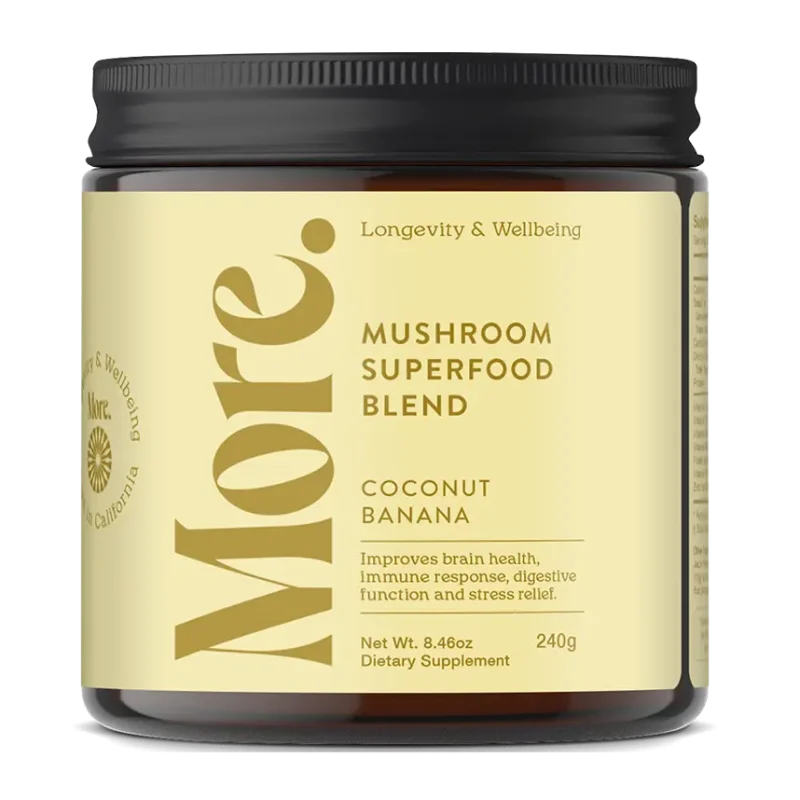
This is why many functional mushroom coffee blends combine multiple fruiting body extracts with adaptogenic support
Research on adaptogens and functional mushrooms is ongoing.
Human and animal studies have explored:
Ashwagandha and cortisol reduction [1]
Lion’s Mane and cognitive function [4]
Cordyceps and exercise performance [6]
Beta-glucans and immune modulation [7]
While findings are promising, results vary depending on extract quality, dosage, and study design. More large-scale human trials are needed in several areas.
As with any supplement, adaptogens and functional mushrooms are not suitable for everyone.
Possible considerations include:
Mild digestive discomfort
Interactions with blood pressure or blood sugar medications
Potential immune stimulation in autoimmune conditions
Not recommended during pregnancy or breastfeeding without medical supervision
Individuals taking medications or managing chronic health conditions should consult a qualified healthcare professional before starting new supplements.
Dietary supplements are not regulated as strictly as prescription medications, making third-party testing and transparent labeling especially important.
Fatigue and stress rarely stem from one isolated cause.
They may involve:
Elevated stress hormones
Poor sleep quality
Gut-brain imbalance
Nutrient depletion
Inflammatory signaling
Well-formulated combinations of botanicals, mushrooms, and nutrients may address multiple pathways simultaneously, supporting more comprehensive resilience.
Proprietary blends without dosage transparency
Mycelium grown on grain without beta-glucan standardization
Artificial fillers or synthetic dyes
No third-party testing
Transparent ingredient labeling
Standardized extracts
Fruiting body mushroom extracts
GMP-certified manufacturing
Independent laboratory testing
Independent testing helps confirm that products are free from contaminants such as heavy metals, pesticides, mold, or harmful microbes.
Adaptogens regulate stress response systems like the HPA axis, while functional mushrooms influence immune and neurological pathways through bioactive compounds.
Yes. Many formulas combine both to support stress resilience, cognitive performance, and immune balance.
Some individuals notice changes within days, though research suggests consistent use over several weeks is often needed.
When properly sourced and used as directed, functional mushroom extracts are generally considered safe for healthy adults.
Certain adaptogens, such as Ashwagandha, have been studied for supporting balanced cortisol levels during stress [1].
Adaptogens and functional mushrooms reflect a systems-based approach to health — one that recognizes the interconnected nature of stress, immunity, energy, and cognition.
By understanding how they differ, how they work, and how to evaluate quality, you can make informed decisions rooted in research rather than trends.
[1] A Prospective, Randomized Double-Blind, Placebo-Controlled Study of Ashwagandha Root Extract in Reducing Stress and Anxiety
Chandrasekhar K, et al. Indian Journal of Psychological Medicine, 2012.
[2] Rhodiola rosea in Stress-Induced Fatigue: A Double-Blind Cross-Over Study
Darbinyan V, et al. Phytomedicine, 2000.
[3] Effects of Adaptogens on the Central Nervous System and the Molecular Mechanisms Associated with Their Stress-Protective Activity
Panossian A, Wikman G. Pharmaceuticals, 2010.
[4] Improving Effects of Hericium erinaceus on Mild Cognitive Impairment: A Double-Blind Placebo-Controlled Clinical Trial
Mori K, et al. Phytotherapy Research, 2009.
[5] Ganoderma lucidum (Reishi Mushroom): A Review of Its Potential Therapeutic Effects
Wachtel-Galor S, et al. American Journal of Chinese Medicine, 2011.
[6] Cordyceps militaris Improves Tolerance to High-Intensity Exercise After Acute and Chronic Supplementation
Hirsch KR, et al. Journal of Dietary Supplements, 2016.
[7] β-Glucans as Immunomodulators
Vetvicka V, et al. Journal of the American Nutraceutical Association, 2013.



©2025 More longevity & Wellbeing

Merchandise manufactured in a facility that
complies with good manufacturing practices
Merchandise manufactured in a facility that
complies with good manufacturing practices