Why Supplements Still Feel Stuck in the 1950s
Walk down the wellness aisle of almost any major retailer today, and you are met with an overwhelming wall of isolation



But the principle behind holistic health is not vague at all.
It reflects a shift in perspective: from viewing one concern in isolation to considering the biological, behavioral, social, and environmental factors that may shape a person’s wellbeing. This is also central to how the National Center for Complementary and Integrative Health describes whole-person health.
Holistic health does not mean rejecting conventional medicine. It does not mean that “natural” is automatically better, or that every concern requires multiple remedies. Medical care, lifestyle changes, and targeted supplementation can all have a place.
The defining feature is not the type of support being used. It is how thoughtfully the need is understood.
Consider something as ordinary as a small cut.
The damage may be visible on the skin, but the repair process reaches far beyond the surface. Wound healing is commonly described in four overlapping phases: hemostasis, inflammation, proliferation, and remodeling.
First, damaged blood vessels constrict and platelets gather to help form a clot. This limits bleeding and creates a temporary structure over the injured area.
Immune cells then help clear damaged material and protect the site. At the same time, chemical signals recruit other cells needed for repair.
New blood vessels begin forming to support the healing tissue. Fibroblasts produce collagen and other structural materials. Skin cells move across the wound to help close the surface. Even after the cut appears healed, the new tissue continues to reorganize and strengthen.
What looks like one small skin injury requires clotting, immune activity, circulation, cellular communication, and tissue construction.
The important word is overlapping. The body does not complete one department’s task and then hand the work to the next. These processes communicate, respond, and adjust as healing progresses.
That coordination is what “the body works as a system” actually means.
Once holistic health is understood as coordination, the wellness industry’s frequent emphasis on “more” becomes easier to question.
A longer routine is not automatically more comprehensive. A supplement with twenty ingredients is not necessarily more thoughtful than one with five. And a single ingredient is not inherently simplistic if it has a clear and appropriate role.
The number of inputs does not tell us whether they make sense together.
More useful questions include:
A formula can contain many popular ingredients and still lack a coherent purpose. Holistic thinking is not demonstrated by how much is included. It is demonstrated by whether the pieces have a reason to be together.
The idea can sound overwhelming if it is interpreted as a requirement to optimize every part of life simultaneously.
That is not the goal.
Seeing the whole allows us to prioritize more intelligently. It means defining the need, considering the conditions surrounding it, choosing the most relevant form of support, and recognizing when professional evaluation may be appropriate.
Sometimes the next step may involve nutrition, sleep, movement, or stress management. Sometimes it may involve medical care. Sometimes targeted supplementation may complement those foundations.
The value of the holistic perspective is not that it produces the same answer every time. It helps us ask a better question before choosing one.
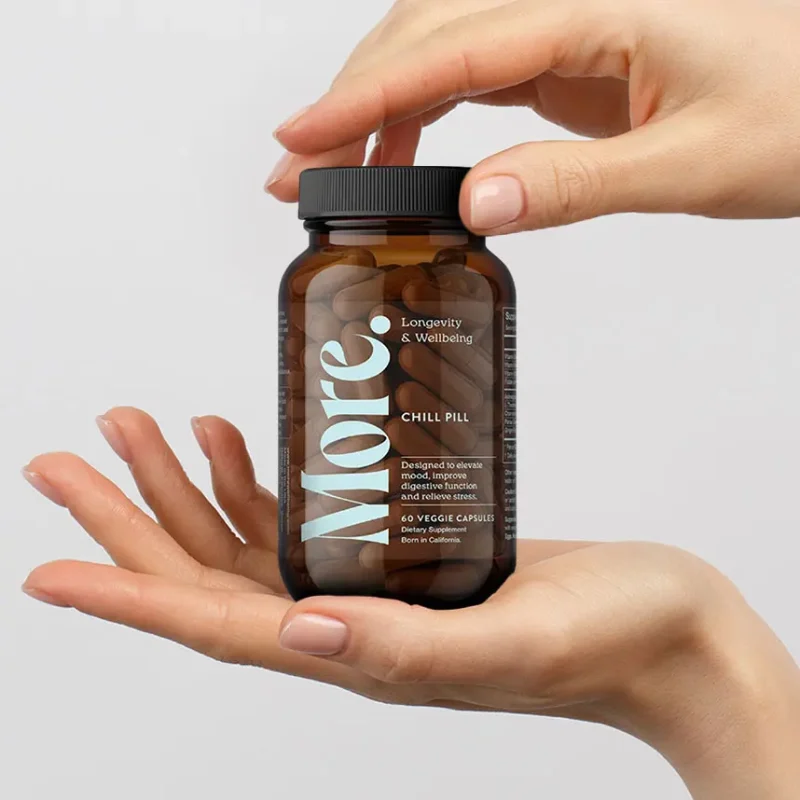
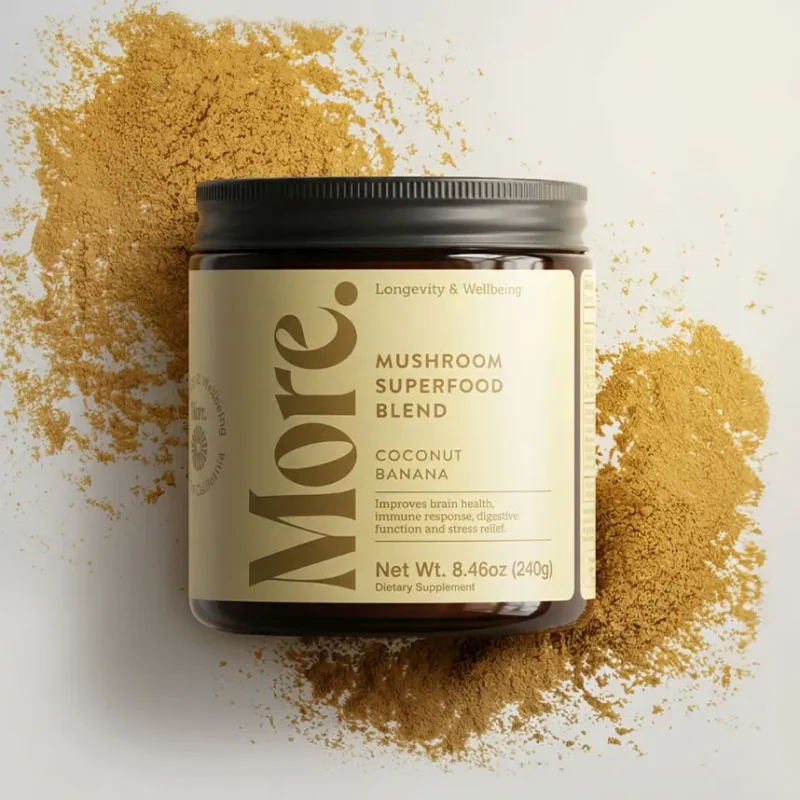
At More., we do not position one product as a whole-body answer. Each formula is created to support a defined area of wellbeing.
When several nutrients or botanicals are combined, each should contribute something specific to the formula. Every ingredient and amount is disclosed, and we do not use proprietary blends. The goal is not to build the longest label. It is to create a formulation whose purpose can be explained.
We also believe transparency includes acknowledging limits. Supplements can complement nutrition, sleep, movement, and appropriate care. They cannot replace them.
Holistic health should lead to clearer reasoning, not broader promises. It asks us to understand coordination, context, and limits.
The body has always worked as a system. Our approach to wellbeing should be intelligent enough to recognize it.
Choose You. Choose More.
This article is for educational purposes only and is not a substitute for professional medical advice, diagnosis, or treatment.





©2026 More longevity & Wellbeing

Merchandise manufactured in a facility that
complies with good manufacturing practices

Merchandise manufactured in a facility that
complies with good manufacturing practices