Systems-Based Support vs. Reversing Aging
What honest longevity support can and cannot do
Reverse your biological age. Turn back the clock. Restore youth at the cellular level.



A bottle of calcium.
A bottle of zinc.
A bottle of vitamin D.
A bottle for energy.
A bottle for stress.
A bottle for sleep.
To the consumer, this can look like variety.
But to anyone who understands human biology, it reveals a deeper problem: much of the supplement industry still trains people to think about the body in isolated parts.
One symptom.
One ingredient.
One bottle.
But biology does not work in straight lines.
It works in loops.
The nervous system talks to the gut. The gut talks to the immune system. Hormones influence sleep, metabolism, mood, and energy. Nutrients often depend on one another to be absorbed, activated, and used properly.
So why does the wellness aisle still look so fragmented?
To understand the single-ingredient myth, we have to look at how the industry got here, why isolated thinking became so common, and why true longevity requires a more structured approach.
The idea that the human body operates as an interconnected system is not new.
In fact, systems-based thinking is older than the single-ingredient supplement model.
For thousands of years, traditional medical systems viewed health as a relationship between different parts of the body, not as a collection of disconnected symptoms. Ayurveda, Traditional Chinese Medicine, early Greek philosophy, and other long-standing traditions all recognized that what appears on the surface may be connected to deeper internal patterns.
Modern science has moved in a similar direction.
In the 20th century, biologist Ludwig von Bertalanffy helped formalize General Systems Theory, which emphasized that living organisms cannot be fully understood by studying isolated parts alone. The whole has patterns, properties, and relationships that individual pieces do not explain by themselves.
Later, systems biology expanded this idea even further, looking at how genes, proteins, cells, organs, and biological networks interact. Today, systems medicine continues to explore how the nervous system, gut microbiome, immune system, metabolism, and hormones influence one another.
In other words, the body has always been connected.
The problem is that much of the supplement aisle still behaves as if it is not.
The single-ingredient model did not appear by accident.
When scientists first identified and isolated vitamins, it was a major breakthrough. Nutrients like vitamin C, vitamin D, and B vitamins helped explain and prevent serious deficiency-related conditions.
That discovery mattered.
But over time, a useful scientific breakthrough became a simplified commercial model.
One nutrient became linked to one outcome:
• Calcium became “for bones”
• Vitamin C became “for immunity”
• Magnesium became “for relaxation”
• Caffeine became “for energy”
This made supplements easier to market.
It also made them easier to manufacture.
From a production standpoint, single-ingredient products are often simpler to source, test, scale, and sell. A basic single-nutrient capsule is easier to explain than a formula designed around nutrient interaction, bioavailability, absorption, and system-level support.
But easier does not always mean better.
The body does not ask, “What is the hero ingredient?”
The body asks:
Can I absorb this?
Can I activate it?
Can I use it?
Does it work with the other systems around it?
That is where isolated thinking begins to fall short.
There is another reason the single-ingredient model became so dominant.
It is efficient.
A single generic raw material is often easier to source, easier to test, easier to encapsulate, and easier to scale. It also makes for simpler front-label messaging.
But building a thoughtful, systems-based formula is more complex.
When you combine fruiting body mushroom extracts, bioavailable mineral forms, methylated B vitamins, adaptogens, amino acids, botanicals, and prebiotic fiber, the formulation has to be designed with much more care.
You have to think about:
• Taste
• Texture
• Stability
• Ingredient compatibility
• Dosing
• Absorption
• Purpose
That level of formulation is harder.
But it is also more aligned with how the body actually works.
This is why transparency matters. Some formulas rely on proprietary blends, where exact ingredient amounts are hidden from the consumer. Others are built around a well-known ingredient on the front of the label, even if the full formula lacks meaningful structure.
The issue is not that single ingredients are always bad.
The issue is that single-ingredient thinking became the default way people were taught to understand wellness.
And the body is not that simple.
Your body is an ecosystem.
When you take a single ingredient without considering the system around it, you may be giving the body the bricks while forgetting the mortar, the tools, and the blueprint.
Take bone health as an example.
For decades, calcium was treated as the obvious answer. But bone health is not only about calcium.
The body also needs:
• Vitamin D3 to support calcium absorption
• Magnesium to support vitamin D activation and mineral balance
• Vitamin K2 to help support healthy calcium direction in the body
Bone support is not a single-nutrient conversation.
It is a system.
The same is true for stress and energy.
Chronic stress does not only affect mood. It can influence sleep quality, digestion, blood sugar balance, hormonal patterns, focus, and overall resilience.
That is why a simple “energy booster” or a single calming ingredient may not always address what is happening underneath.
Sometimes the body does not need to be pushed harder.
It needs support across the systems that are already working overtime.
The modern consumer is exhausted.
They are tired of managing a cabinet full of disconnected bottles, navigating overlapping claims, and playing amateur formulator every morning.
A capsule for this.
A powder for that.
Another bottle added every time a new symptom appears.
The result is not always a better routine.
Often, it is confusion.
People are left trying to understand whether ingredients overlap, compete, duplicate, or actually belong together.
This is where the supplement industry has made wellness feel more complicated than it needs to be.
Not because people need less support.
But because they need more structure.
The future of wellness is not about creating more isolated products.
It is about creating formulas that make biological sense.
A systems-based approach asks better questions.
Not just:
“What ingredient is popular right now?”
But:
• What process are we supporting?
• What systems are involved?
• What nutrients work together?
• What form is most usable?
• What does the body actually need to do its job?
This is the difference between chasing symptoms and supporting the process underneath them.
It is also the difference between random supplementation and a smarter routine.
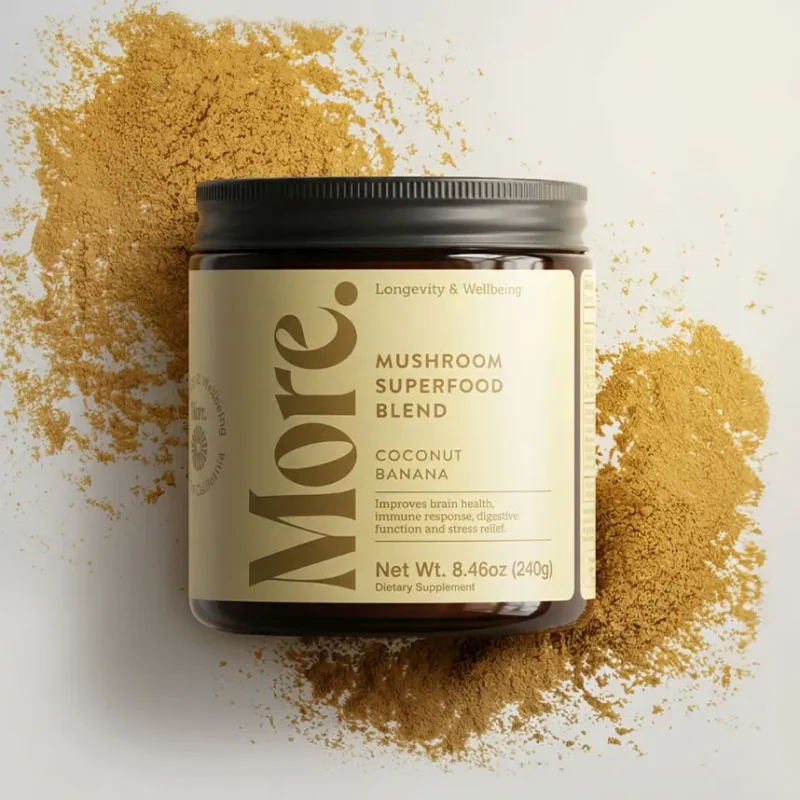
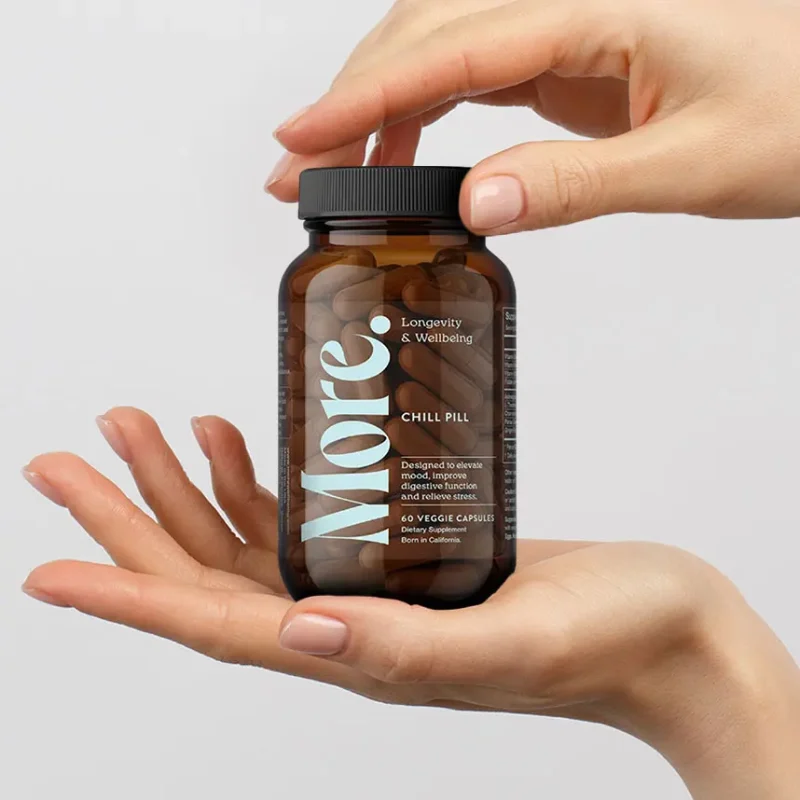
At More. Longevity & Wellbeing, this is the foundation of how we formulate.
We do not believe the body is a collection of isolated problems.
We believe it is an intelligent, connected system that deserves intelligent, connected support.
That means:
• No proprietary blends
• No unnecessary fillers
• No hidden amounts
• No formulas built around one trendy hero ingredient
Just thoughtful, systems-based support designed with bioavailability, synergy, and purpose in mind.
Because the goal was never to have a fuller cabinet.
The goal is a smarter routine.
If I have a nutrient deficiency, shouldn’t I just take a high-dose single nutrient?
If you have a diagnosed deficiency, that is something to discuss with a qualified healthcare provider.
More. was not built as an acute intervention. It was built for long-term support.
Longevity is not a crisis model. It is a process. The body does not rely on isolated nutrients alone. It relies on biological loops, cofactors, absorption pathways, and balance between systems.
For example, minerals and vitamins often work best when they are supported by the right forms, cofactors, and complementary nutrients. That is why our formulas are designed around synergy, not isolated megadoses.
The goal is not just to take one nutrient.
The goal is to support the system around it.
Why not just buy a low-cost single mineral or vitamin from the drugstore?
Price per bottle does not always tell the full story.
Supplement quality depends on form, absorption, dose, purpose, and how the ingredient works within the full formula. Some lower-cost minerals may use forms that are less bioavailable or harder for some people to tolerate.
At More., we focus on thoughtful ingredient forms, including methylated and chelated nutrients where appropriate, and formulas designed to work as a structured system.
The most important question is not only, “How much does this cost?”
It is also, “What form is it in, how well is it used by the body, and does it make sense within the formula?”
Why not build my own routine with single-ingredient supplements?
You can. Some people prefer that approach.
But for many people, a supplement cabinet becomes complicated quickly. Multiple single bottles can create overlap, redundancy, or combinations that do not work as well together as people assume.
More. was created to make wellness more structured.
Instead of asking customers to manage many disconnected bottles, we build formulas with complementary ingredients that support a specific biological system or need.
The goal is not to remove personalization.
The goal is to remove unnecessary guesswork.
Is a higher percentage of the Daily Value always better?
Not always.
More is not automatically better. Stronger is not always smarter.
Some nutrients have a point where the body can only use so much at one time. Very high amounts are not always necessary, and in some cases may not be the most thoughtful approach for daily wellness.
At More., we focus on purposeful, evidence-informed dosing and ingredient synergy.
We care about what the body can actually use, not just what looks impressive on a label.
Why does transparency matter?
Transparency matters because it allows customers to understand what they are taking.
More. does not use proprietary blends because we believe people deserve to know what is in a formula and why it is there.
When a product hides ingredient amounts inside a proprietary blend, it becomes difficult to evaluate the formula clearly. You may see a long list of impressive ingredients without knowing whether each one is included in a meaningful amount.
At More., we believe integrity starts with clarity.
No proprietary blends.
No unnecessary mystery.
Just structured formulas built with purpose.
Why should a retailer consider More. instead of another legacy supplement brand?
Many legacy supplement brands compete through price, trend cycles, and large SKU counts. That can create overlap on the shelf and confusion for the customer.
More. takes a different approach.
We are not trying to add more noise to the supplement aisle. We are creating a clearer structure for how customers build a wellness routine.
Each formula has a defined role. Each product supports a specific system or need. Together, the line helps customers move from disconnected purchases toward a routine they can understand and maintain.
That is where loyalty is built.
Not through more bottles.
Through more clarity.
Choose you. Choose More.
For educational purposes only. Not medical advice.




©2026 More longevity & Wellbeing

Merchandise manufactured in a facility that
complies with good manufacturing practices

Merchandise manufactured in a facility that
complies with good manufacturing practices