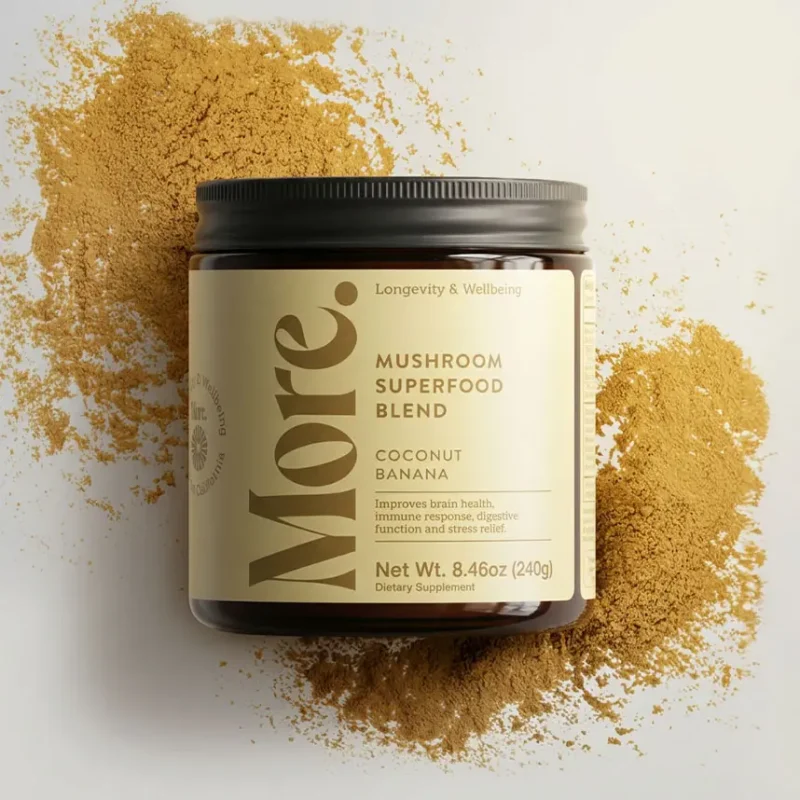
Why Supplements Still Feel Stuck in the 1950s
Walk down the wellness aisle of almost any major retailer today, and you are met with an overwhelming wall of isolation


Midlife can bring several changes at once. Sleep may become less predictable. Energy can shift. Concentration may feel different. Weight may change. Hot flashes or night sweats may appear.
Because these changes often happen during perimenopause or after menopause, it is easy to place them all under one label: menopause.
But symptoms do not always reveal their cause. Two changes can occur during the same stage of life without one causing the other.
That distinction matters when menopause and thyroid health are discussed together.
Menopause is a natural life transition linked to changes in ovarian hormones. Common experiences include hot flashes, disrupted sleep, changes in mood, and difficulty concentrating.
An underactive thyroid can also be associated with broad, nonspecific symptoms, including fatigue, weight gain, difficulty tolerating cold, and depression. Importantly, the National Institute of Diabetes and Digestive and Kidney Diseases notes that symptoms alone cannot confirm hypothyroidism because many of them can have other causes.
This creates a real challenge in midlife. A woman may experience fatigue or a change in weight while also moving through menopause. The timing may make menopause seem like the obvious explanation, but timing is not proof of cause.
A 2026 study in The Journal of Clinical Endocrinology & Metabolism followed 7,644 healthy Japanese women who experienced natural menopause. Researchers examined health-check data collected over 20 years, including nearly 87,000 visits. They tracked two commonly used measures of thyroid function: thyroid-stimulating hormone, known as TSH, and free thyroxine, known as free T4.
Thyroid abnormalities became more common as the women grew older. However, the researchers did not find a distinct, clinically meaningful shift in thyroid function at the point of menopause.
In plain English, thyroid measurements changed gradually with age, but menopause itself did not appear to create a separate turning point.
The study therefore challenges a common assumption. In this population, when changes in thyroid laboratory measurements were noticed around menopause, menopause itself may not have been the reason those laboratory trajectories occurred.
It does not mean menopause symptoms are not real.
It does not mean thyroid conditions are unimportant.
It does not mean every woman will follow the same pattern.
It also does not mean thyroid evaluation is unnecessary. In fact, the overlap in possible symptoms is precisely why assumptions can be unhelpful. Menopause and thyroid disease can still coexist, even when menopause is not the cause of a change in thyroid laboratory values.
This was an observational study of generally healthy Japanese women. Women using hormone therapy and women who experienced surgical menopause were excluded. The findings may not apply in the same way to every population or to women who already have thyroid disease. Iodine status, rates of thyroid autoimmunity, and access to healthcare also differ across populations and may influence what researchers observe. The study focused on laboratory patterns rather than explaining every symptom a woman might feel.
The most useful lesson is larger than thyroid health.
Several biological and life changes can happen during midlife. Menopause, aging, stress, sleep disruption, medication use, and an unrelated health condition may coexist. When two things appear at the same time, the first has not necessarily caused the second.
That is why phrases such as “menopause disrupts your thyroid” should be treated cautiously. They can turn an association in time into a biological claim that the evidence may not support.
A more responsible question is: Could this be related to menopause, or is there another explanation worth considering?
There is no need to self-diagnose every midlife change. There is also no reason to accept every symptom automatically as “just menopause.”
If a symptom is new, persistent, severe, or disruptive, discussing it with a qualified healthcare professional can help separate possibilities. A clinician may consider the full history, symptoms, medications, and appropriate testing. Because menopause and thyroid disease can occur together and share symptoms, clinical reviews encourage a low threshold for evaluation when symptoms overlap. Thyroid conditions cannot be confirmed by symptoms alone.
This is also an important boundary for supplements. A dietary supplement cannot diagnose a thyroid condition, replace appropriate testing, or substitute for medical treatment.
More. Menopause Support is not a thyroid product and should not be presented as one. This article is not an attempt to connect thyroid health to the formula. It is an invitation to think more carefully about the way women’s midlife symptoms are interpreted.
Menopause is real. Thyroid conditions are real. Aging is real. They may overlap, but they are not interchangeable.
Women deserve more than an automatic explanation. They deserve the right questions.
1. Hayashi S, Fukui S, Leung AM, Noto H, Inoue K. Menopausal transition and thyroid function trajectories: a large-scale longitudinal study of healthy women. The Journal of Clinical Endocrinology & Metabolism. Published August 19, 2026. doi:10.1210/clinem/dgag337.
2. National Institute of Diabetes and Digestive and Kidney Diseases. Hypothyroidism (Underactive Thyroid).
3. U.S. Office on Women’s Health. Menopause symptoms and relief. Updated May 30, 2025.
4. Mintziori G, et al. EMAS position statement: Thyroid disease and menopause. Maturitas. 2024;185:107991.
This article is for educational purposes only and is not medical advice. More. products are dietary supplements and are not intended to diagnose, treat, cure, or prevent any disease.



©2026 More longevity & Wellbeing

Merchandise manufactured in a facility that
complies with good manufacturing practices

Merchandise manufactured in a facility that
complies with good manufacturing practices