Why Supplements Still Feel Stuck in the 1950s
Walk down the wellness aisle of almost any major retailer today, and you are met with an overwhelming wall of isolation



There is magnesium for sleep, B12 for energy, a probiotic for digestion, something for stress that a podcast recommended, a greens powder you meant to use more consistently, collagen, and maybe even a second magnesium because the first one was not the right kind.
Most are half full. Some are expired. You are not entirely sure which ones are helping. Yet every time a new concern shows up, the instinct is the same: add one more bottle.
There is a reason this pattern feels so familiar. Wellness has become a steady accumulation of solutions, each one sold as though the next bottle might finally be the one that brings everything into balance.
But what many people are actually experiencing is supplement fatigue. Not the fatigue supplements are meant to solve, but the fatigue of the routine itself. Too many products. Too many ingredients. Too little clarity about what is truly worth taking.
This is not simply a motivation problem.
It is a design problem.
The supplement category is still largely organized around isolated ingredients and isolated symptoms. Low energy gets one product. Poor sleep gets another. Stress, digestion, focus, bloating, skin, and mood each get their own answer, packaged as though the body works in neat and separate compartments.
That structure may be good for shelf space. It is far less helpful for the person trying to create a routine that feels coherent.
Because the body does not work in silos. Energy is shaped by sleep. Sleep is shaped by stress. Stress can influence digestion. Gut health can affect how you feel more broadly. When every issue is treated as its own standalone problem, the result is often a supplement drawer full of disconnected products and a routine that becomes harder to maintain than the concerns that started it.
A better routine is not necessarily larger. In many cases, it is simply more thoughtful.
That starts with formulas built around interconnected systems rather than one ingredient matched to one complaint. It means choosing nutrients in forms the body can use, supportive compounds at meaningful amounts, and formulas designed with intention rather than label decoration.
It also means full transparency.
That level of honesty matters. If you cannot see what is in a formula and how much of it is there, it becomes difficult to know whether it has earned a place in your day.
Simplifying your supplement routine does not mean abandoning support altogether.
If your healthcare practitioner has you on a specific nutrient, keep it. If there is a targeted need your body genuinely requires, that is not clutter. That is care. The goal is not to take nothing. The goal is to stop treating every new concern as a reason to buy another bottle.
A useful routine should feel:
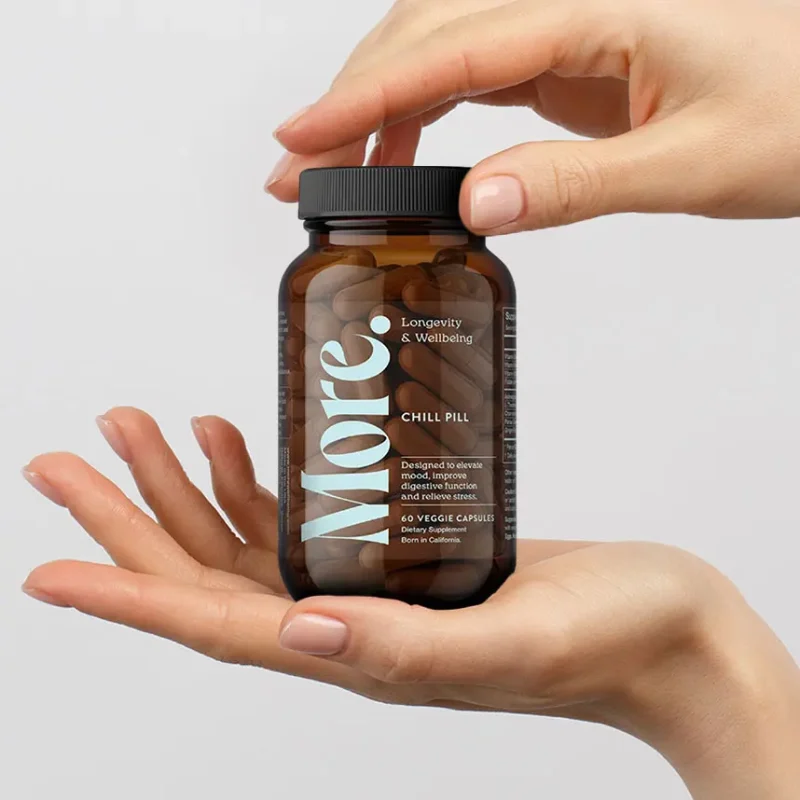
That is the thinking behind More.
We did not build a line around single-ingredient accumulation. We built formulas around how the body actually functions: connected systems, real support, full disclosure, and doses that are there for a reason.
If your current routine already feels crowded, the next step may not be adding. It may be replacing what is not earning its place.
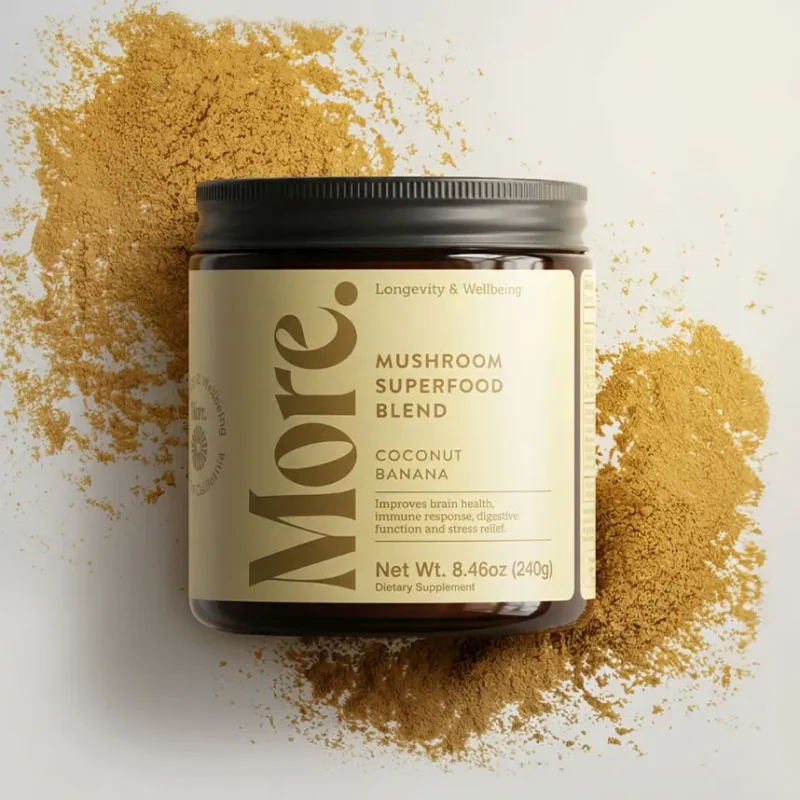
One simple place to begin is with something you already reach for each morning. Our Mushroom Coffee Superfood Blend was designed as an easy daily swap. A familiar ritual, made more supportive. From there, the rest of the line is organized around what you are actually trying to support, so your routine feels more intentional and less like guesswork.
Fewer products.
Meaningful amounts.
Nothing to hide.
Choose You. Choose More.
This article is for educational purposes only and is not medical advice.
If you are pregnant, nursing, have a medical condition, take medication, or have been advised to use a specific nutrient by your healthcare practitioner, speak with a qualified professional before changing your supplement routine.





©2026 More longevity & Wellbeing

Merchandise manufactured in a facility that
complies with good manufacturing practices
Merchandise manufactured in a facility that
complies with good manufacturing practices