10 Benefits of Ashwagandha: What Science Says

Used for centuries in traditional practices and increasingly studied in modern research, it has attracted attention for its potential to support the body’s response to stress, sleep quality, cognitive function, and overall wellbeing.

But ashwagandha is not a magic ingredient.

At More., we believe lasting wellness is built by supporting the body’s interconnected systems rather than relying on a single nutrient or herb. Ashwagandha can play an important role, but it works best alongside other supportive nutrients and healthy lifestyle habits.

Here are 10 potential benefits of ashwagandha based on current scientific evidence.

1. Supports a Healthy Stress Response

Ashwagandha is classified as an adaptogen, a group of herbs that may help the body adapt to physical and mental stress. Clinical studies suggest it may help support the body’s response to everyday stress, promoting greater resilience and helping maintain healthy cortisol levels already within the normal range.

2. May Promote a Calmer Mood

By supporting the body’s natural response to stress, ashwagandha may help promote a greater sense of calm and emotional balance. Many people choose it as part of a daily wellness routine to help manage the demands of modern life.

3. Supports Healthy Sleep

Stress and sleep are closely connected. Research suggests ashwagandha may help improve certain aspects of sleep quality in adults experiencing stress or occasional sleep difficulties, helping support more restorative rest.

4. Supports Cognitive Function

Emerging research suggests ashwagandha may support attention, memory, and mental performance, particularly during periods of prolonged stress. While research continues, early findings are encouraging.

5. Supports Physical Performance

Several studies have explored ashwagandha’s potential role in supporting strength, endurance, and exercise performance when combined with regular physical activity. These benefits are thought to be related, in part, to its ability to support the body’s response to physical stress.

6. May Help Support Exercise Recovery

Recovery is an important part of maintaining an active lifestyle. Some research suggests ashwagandha may help support post-exercise recovery and reduce perceived fatigue following physical activity. While individual results vary, these findings add to the growing body of research exploring ashwagandha’s role in overall physical wellbeing.

7. Supports Healthy Energy Levels

Unlike stimulants that create a temporary surge in energy, ashwagandha does not work by stimulating the nervous system. Instead, it may help support sustained energy by promoting the body’s ability to adapt to ongoing physical and mental stress.

8. Supports Mental Resilience

Resilience is the ability to adapt to life’s everyday challenges. By supporting the body’s stress response, ashwagandha may help people feel better equipped to navigate periods of physical or emotional demand.

9. May Support Healthy Inflammatory Balance

Ashwagandha naturally contains compounds that have been studied for their role in supporting normal inflammatory processes already present in the body. While research in this area continues to evolve, current findings are promising.

10. Works Best Alongside Complementary Ingredients

Perhaps the most overlooked point is that ashwagandha does not work in isolation.

The body’s response to stress involves multiple biological systems. While ashwagandha supports one part of that picture, other ingredients can provide complementary support. For example, L-theanine has been studied for promoting relaxed alertness, lemon balm and chamomile have traditionally been used to support relaxation, ginger supports digestive comfort, and B vitamins help support normal energy metabolism and nervous system function.

This complementary approach is reflected in our own formulations. Rather than relying on one ingredient to do everything, we thoughtfully combine botanicals, amino acids, vitamins, and minerals that support different biological systems working together. The goal is to create balanced formulas that provide more comprehensive support for everyday wellbeing.

The Bottom Line

Ashwagandha has earned its place as one of the most researched adaptogenic herbs available today. Current evidence suggests it may support the body’s response to stress, calmer mood, better sleep, cognitive function, physical performance, exercise recovery, and overall wellbeing.

Like most botanicals, however, its benefits are best understood as part of a broader wellness strategy rather than a standalone solution.

Supporting your health is rarely about finding one perfect ingredient. It is about consistently supporting the systems that help your body function at its best.

Disclaimer

Disclaimer: This article is intended for educational purposes only and should not be considered medical advice. Always consult your healthcare provider before starting any dietary supplement, especially if you are pregnant, nursing, taking medication, or have a medical condition.

These statements have not been evaluated by the Food and Drug Administration. This product is not intended to diagnose, treat, cure, or prevent any disease.


Why More Vitamins Don’t Always Mean More Energy

Usually, that means caffeine, sugar, or other stimulants designed to create a quick lift. It can feel like energy in the moment, but a rapid surge is not the same as supporting the biological processes that produce energy throughout the day.

Real energy begins inside your cells.

Nearly every cell in your body contains mitochondria, often described as the cell’s energy-producing structures. Their job is to convert nutrients and oxygen into ATP (adenosine triphosphate), the primary energy currency of the cell. When this process is well supported, it helps provide the energy needed for everyday physical and mental performance. When it is compromised, simply adding more stimulants does little to address the underlying biology.

Our approach begins with supporting those biological processes rather than chasing temporary stimulation. B vitamins, for example, play essential roles as cofactors in the biochemical pathways that help convert carbohydrates, fats, and proteins into ATP. These vitamins do not create energy on their own, but they help enable the processes your cells rely on to produce it.

The form of a nutrient can matter as well. Some people have genetic variations that influence aspects of folate metabolism, which is one reason methylated forms are commonly used in certain formulations. While they are not necessary for everyone, selecting bioavailable forms reflects an approach focused on supporting normal physiology rather than following marketing trends.

Energy Is Influenced by Far More Than Vitamin Intake Alone

Sleep quality, stress, nutrient status, digestion, absorption, hydration, physical activity, and overall health all affect how efficiently your body can produce and use energy. Looking at only one part of that picture while overlooking the rest can miss the factors that matter most.

That perspective has shaped every More. formula from the beginning.

We believe effective formulations should reflect how the body actually works: through interconnected biological systems rather than isolated ingredients. That is why we prioritize thoughtful combinations, meaningful ingredient forms, and transparent labeling over chasing the next trend.

Because lasting energy is not about creating a bigger surge.

It is about supporting the biology that makes energy possible.

Choose You. Choose More.

Disclaimer

Disclaimer: This article is for educational purposes only and is not intended as medical advice. These statements have not been evaluated by the Food and Drug Administration. More. products are not intended to diagnose, treat, cure, or prevent any disease.

Supplement Fatigue Is Real. Here’s How to Simplify Your Routine

There is magnesium for sleep, B12 for energy, a probiotic for digestion, something for stress that a podcast recommended, a greens powder you meant to use more consistently, collagen, and maybe even a second magnesium because the first one was not the right kind.

Most are half full. Some are expired. You are not entirely sure which ones are helping. Yet every time a new concern shows up, the instinct is the same: add one more bottle.

There is a reason this pattern feels so familiar. Wellness has become a steady accumulation of solutions, each one sold as though the next bottle might finally be the one that brings everything into balance.

But what many people are actually experiencing is supplement fatigue. Not the fatigue supplements are meant to solve, but the fatigue of the routine itself. Too many products. Too many ingredients. Too little clarity about what is truly worth taking.

This is not simply a motivation problem.

It is a design problem.

The One-Bottle Trap

The supplement category is still largely organized around isolated ingredients and isolated symptoms. Low energy gets one product. Poor sleep gets another. Stress, digestion, focus, bloating, skin, and mood each get their own answer, packaged as though the body works in neat and separate compartments.

That structure may be good for shelf space. It is far less helpful for the person trying to create a routine that feels coherent.

Because the body does not work in silos. Energy is shaped by sleep. Sleep is shaped by stress. Stress can influence digestion. Gut health can affect how you feel more broadly. When every issue is treated as its own standalone problem, the result is often a supplement drawer full of disconnected products and a routine that becomes harder to maintain than the concerns that started it.

What a Better Routine Looks Like

A better routine is not necessarily larger. In many cases, it is simply more thoughtful.

That starts with formulas built around interconnected systems rather than one ingredient matched to one complaint. It means choosing nutrients in forms the body can use, supportive compounds at meaningful amounts, and formulas designed with intention rather than label decoration.

It also means full transparency.

  • Every ingredient listed.
  • Every amount disclosed.
  • Nothing hidden behind proprietary language that asks for trust without offering proof.

That level of honesty matters. If you cannot see what is in a formula and how much of it is there, it becomes difficult to know whether it has earned a place in your day.

Simplifying Without Stripping Everything Back

Simplifying your supplement routine does not mean abandoning support altogether.

If your healthcare practitioner has you on a specific nutrient, keep it. If there is a targeted need your body genuinely requires, that is not clutter. That is care. The goal is not to take nothing. The goal is to stop treating every new concern as a reason to buy another bottle.

A useful routine should feel:

  • Clear enough to follow.
  • Transparent enough to trust.
  • Thoughtful enough to support more than one piece of the picture at once.

Where More Comes In

That is the thinking behind More.

We did not build a line around single-ingredient accumulation. We built formulas around how the body actually functions: connected systems, real support, full disclosure, and doses that are there for a reason.

If your current routine already feels crowded, the next step may not be adding. It may be replacing what is not earning its place.

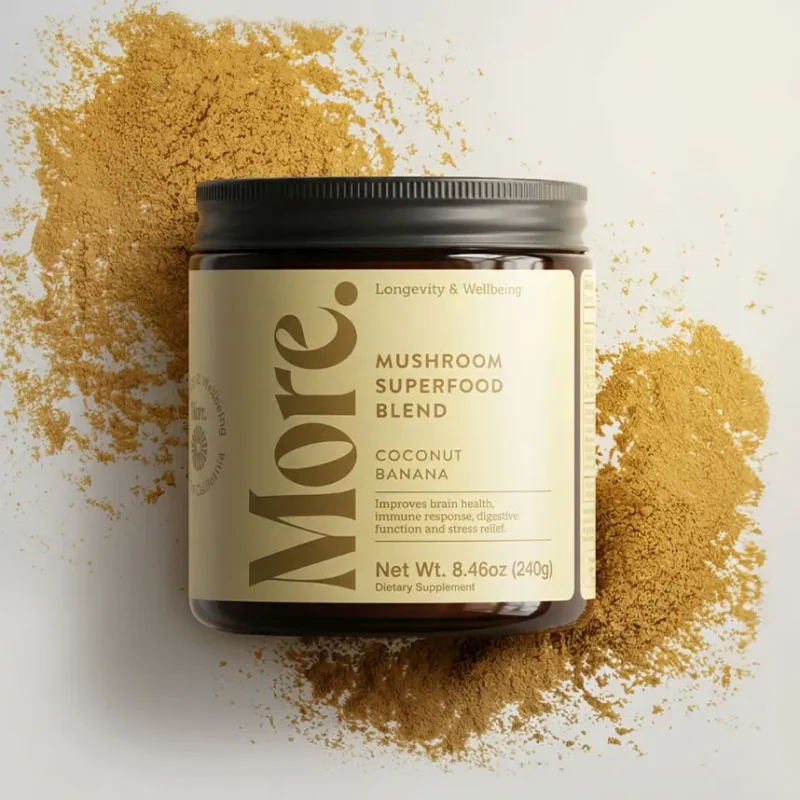
One simple place to begin is with something you already reach for each morning. Our Mushroom Coffee Superfood Blend was designed as an easy daily swap. A familiar ritual, made more supportive. From there, the rest of the line is organized around what you are actually trying to support, so your routine feels more intentional and less like guesswork.

Fewer products.

Meaningful amounts.

Nothing to hide.

Choose You. Choose More.

Disclaimer

This article is for educational purposes only and is not medical advice.

If you are pregnant, nursing, have a medical condition, take medication, or have been advised to use a specific nutrient by your healthcare practitioner, speak with a qualified professional before changing your supplement routine.

Why Do Some Supplements Make Me Feel Worse?

Yet some people experience the opposite.

  • Nausea
  • Digestive discomfort
  • Jitters
  • Headaches
  • Brain fog
  • Sleep disruption

When this happens, it is easy to assume the supplement is ineffective or that supplements simply do not work for you.

In reality, the explanation is often more nuanced.

The issue is not always the ingredient itself. It may be the dose, the form, the timing, the overall formula, or how that formula interacts with your current physiology.

Understanding these variables can help explain why a supplement that benefits one person may feel entirely different for another.

Why Can Supplements Cause Side Effects?

Supplements are active inputs. They can influence digestion, neurotransmitters, blood sugar, circulation, hormones, and the stress response.

That is why they can be helpful. It is also why they can create unwanted effects when they are not the right fit.

A supplement that works well for one person may feel too stimulating, too heavy, or too irritating for another.

Common Reasons Supplements Make You Feel Worse

1. The Dose Is Too High

A label dose may be more than your body can comfortably tolerate, especially if you are sensitive, under significant stress, or taking multiple products.

Common signs include:

  • Nausea
  • Headaches
  • Loose stools
  • Fatigue
  • Jitters

The goal is not always the highest dose. The goal is the most appropriate dose for the individual.

2. The Form Is Not Ideal

The form of an ingredient matters.

Two supplements can contain the same nutrient on the label while using entirely different forms.

Those forms may differ in absorption, digestive tolerance, and how they feel in the body.

Looking only at the amount listed on the label rarely tells the whole story.

3. The Timing Is Off

Some supplements work better with food. Others are better earlier in the day.

Taking the right product at the wrong time can lead to:

  • Nausea
  • Sleep disruption
  • Digestive discomfort
  • Brain fog
  • A wired-but-tired feeling

4. You Are Stacking Too Much

Combining several supplements can create overlap, competing effects, or digestive burden.

A stacked routine makes it harder to identify what is helping and what is causing symptoms.

Sometimes simplifying a routine provides more clarity than adding another product.

5. Your Body Is in a Different State

Stress, poor sleep, illness, hormone shifts, caffeine, alcohol, medications, and gut irritation can all change how you respond.

A supplement that once felt supportive may not feel the same when your physiology changes.

6. Inactive Ingredients Are Bothering You

Fillers, binders, sweeteners, gums, and flavor systems can also affect tolerance.

While these inactive ingredients are often necessary for manufacturing or taste, some individuals may be more sensitive to them than others.

How to Know if a Supplement Is the Problem

If you start feeling worse after beginning a supplement, look for patterns such as:

  • Symptoms that begin soon after dosing
  • Symptoms that improve when you stop taking it
  • Digestive issues, headaches, jitters, sleep disruption, or fatigue
  • A reaction that becomes stronger when combined with other products

If the timing is consistent, the supplement is worth reviewing closely.

What to Do If a Supplement Makes You Feel Worse

  • Stop the product and see whether symptoms settle.
  • Check the label for dose, form, and overlapping ingredients.
  • Review whether you took it with food or on an empty stomach.
  • Reintroduce only if appropriate, and start lower.
  • Change one variable at a time so you can identify the cause.

This approach is often more useful than guessing or adding another product to offset the reaction.

What Well-Designed Supplementation Should Feel Like

A well-designed supplement should work with the body, not against it.

While some ingredients naturally create noticeable effects, quality supplementation should generally feel supportive rather than disruptive.

The goal is not to overwhelm the body with more inputs.

The goal is to provide the right support, in the right form, at the right time.

FAQ

Why do vitamins make me feel sick?

Vitamins can cause nausea, stomach upset, or headaches if the dose is too high, if you take them without food, or if the formula does not suit your body.

Can supplements make anxiety worse?

Yes. Some supplements are stimulating or can affect blood sugar, sleep, or neurotransmitters in ways that increase anxiety or jitteriness.

Should I keep taking a supplement if it makes me feel worse?

Not usually. If a supplement consistently makes you feel worse, stop it and review the dose, formula, timing, and ingredient fit before trying again.

Disclaimer

This article is for educational purposes only and is not intended as medical advice. Always consult a qualified healthcare professional regarding any questions about supplements, medications, or health conditions.

When Everyday Life Starts Feeling Harder Than It Should

But for many people, it happens differently.

It begins quietly.

You become less patient than you used to be. Small inconveniences feel bigger. Your tolerance for stress shrinks. Tasks that once felt manageable start feeling strangely heavy.

Nothing is technically wrong, yet somehow everything feels harder.

The instinct is often to explain these changes as personal shortcomings.

Maybe I need to try harder.

Maybe I need to be more disciplined.

Maybe I’m not handling things as well as I should.

But what if the issue isn’t character?

What if it’s capacity?

The Hidden Cost of Reduced Margin

One of the earliest signs that a system is under strain is not collapse.

It’s reduced margin.

Margin is the space between what life demands and what your system can comfortably handle.

When that margin is healthy, everyday stress remains manageable. A delayed email stays a delayed email. A busy day stays a busy day. A difficult conversation stays a difficult conversation.

But when that margin begins to narrow, ordinary events start feeling disproportionately heavy.

The workload may be the same.

The responsibilities may be the same.

Life itself may not have changed very much.

What has changed is your ability to absorb it.

This is often what people are describing when they say:

“I don’t feel like myself lately.”

How Low Resilience Shows Up

Low resilience rarely announces itself.

It usually appears through subtle shifts:

  • Feeling irritated more easily.
  • Struggling to focus.
  • Feeling mentally scattered.
  • Sleeping but not feeling restored.
  • Feeling both tired and wired.
  • Feeling overwhelmed by responsibilities that once felt manageable.

None of these experiences necessarily mean something is wrong, but they may indicate that the demands on the system are exceeding its ability to recover from them.

Why This Is Not Just a Mindset Issue

Resilience is often framed as a matter of mental strength.

We are encouraged to solve strain with more effort, more discipline, or a better attitude.

Perspective matters.

But resilience is not built by mindset alone.

It is influenced by:

  • Sleep
  • Recovery
  • Stress load
  • Energy availability
  • Movement
  • Daily routines
  • Social connection
  • Nervous system regulation

In other words, resilience is not simply something you think.

It is something your body supports.

This helps explain why people can feel unlike themselves during periods of prolonged stress.

What feels like a motivation problem may not begin with motivation at all.

The system is carrying more than it can currently recover from.

The Mistake Many People Make

When capacity decreases, many people respond by increasing pressure.

They push harder.

Work longer.

Rest less.

Expect more from themselves.

Treat every sign of strain as evidence that they need to become stronger.

Unfortunately, that response often moves them further in the wrong direction.

Resilience is not built by endlessly overriding limits.

It grows when recovery can keep pace with demand.

A Systems-Based View

One reason these experiences can feel confusing is that they are often discussed in isolation.

Sleep is treated as one issue.

Stress as another.

Energy as another.

Focus as another.

But the body does not experience them separately.

They influence one another continuously.

A difficult season can affect sleep. Poor sleep can affect energy. Lower energy can affect focus. Reduced focus can increase stress. Higher stress can make recovery more difficult.

The result is not a collection of disconnected symptoms.

It is a system under load.

At More., we believe wellness support should reflect that reality.

People do not experience wellbeing as a collection of isolated parts. They experience it as an interconnected whole.

That systems-based perspective is the foundation of how we think about wellness and how we design every formula.

A Better Frame

When everyday life starts feeling harder than it should, the most useful question may not be:

“Why am I not handling this better?”

A better question is:

“What is reducing my capacity to adapt right now?”

Because resilience is not about becoming unaffected by life.

It is about maintaining enough capacity to move through it.

And sometimes what feels like weakness is not weakness at all.

It is a system asking for recovery before it asks for more effort.


Disclaimer

For educational purposes only. This content is not intended as medical advice and should not be used to diagnose, treat, cure, or prevent any disease.

What Helps the Body Shift from Stress Mode to Sleep Mode

A person can reach the end of the day physically drained and still not feel fully settled. The mind may stay active. The body may still feel switched on. Digestion may not feel quiet enough to let the evening land.

That is why the transition into rest deserves more attention than it usually gets.

Nighttime is not only about sleep itself. It is also about how the body moves out of stimulation and into a calmer state.

Evening Is a Systems Event

Stress, digestion, and rest are often spoken about as if they belong to separate categories. In practice, they often overlap.

A tense system can make it harder to unwind. An unsettled stomach can make the body feel less at ease. A demanding day can linger longer than expected, even after the schedule ends.

That does not mean every night needs to be analyzed. It means the body often responds better to support that reflects how interconnected these systems already are.

The Formula Behind the Idea

Relax Blend by More. was designed with that broader transition in mind.

The formula provides 200 mg of magnesium from magnesium citrate, along with vitamin C, niacin, vitamin B6, folate, and vitamin B12.

It also includes:

  • Ginger Root Extract
  • Ashwagandha Extract
  • Chamomile Extract
  • Passion Flower Extract
  • Lemon Balm Leaf Extract
  • N-Acetyl L-Tyrosine
  • L-Theanine
  • GABA
  • 5-HTP
  • Inulin from Chicory Root (Prebiotic Fiber)

This combination gives the blend a wider frame. Rather than centering the entire story on a single ingredient, it brings together foundational nutrients, botanical extracts, amino acid compounds, and digestive support in one evening formula.

A More Thoughtful Standard

The supplement space often rewards louder messaging.

Bigger promises. Faster language. Simpler explanations.

But the body is rarely that simple.

A more thoughtful formula does not need to overstate what one ingredient can do when the value is found in how the overall composition was built.

That is part of the standard behind More.

The goal is not simply to create something that sounds calming. It is to create something that reflects a more complete view of what evening support can look like.

Where Relax Fits

Relax Blend by More. is a Honey Lemon Ginger formula designed for the part of the day when more stimulation is not the answer.

Its ingredients were selected to support relaxation and digestive ease as part of a comprehensive evening routine.

That makes the formula feel more aligned with real life. Not because it promises everything, but because it respects that the body rarely works through one pathway at a time.

Final Thought

The transition from a busy day into a restful evening is not always about doing more.

Sometimes it is about creating space for the body to shift gears.

A thoughtful evening routine, supported by ingredients selected with intention, can be part of that process.

Disclaimer

These statements have not been evaluated by the Food and Drug Administration. This product is not intended to diagnose, treat, cure, or prevent any disease.

The Difference Between Wellness Marketing and Wellness Understanding

Wellness has become exceptionally good at signaling credibility. Clean design, elevated routines, expert language, and founder-led storytelling can all help build trust, but they should never replace a clear understanding of what a product is designed to do.

That is the challenge.

Too often, supplements are marketed as symbols of the person someone wants to become rather than tools designed to support a specific need. The result is a category full of beautiful language, strong emotional cues, and not enough explanation.

More. takes a different view. We believe wellbeing is systemic, and supplements should be understood in the context of how people live, think, recover, age, and function day to day.

Wellness Became a Lifestyle Signal

Supplements are no longer sold only through efficacy language. They are also sold through identity.

A product can signal discipline, sophistication, balance, ambition, beauty, resilience, or longevity before a customer understands its formulation. In that kind of market, branding does more than introduce a product. It shapes desire around it.

There is nothing wrong with strong branding. The issue begins when presentation replaces clarity. If a customer finishes reading a page and still does not know what a product is for, who it is for, or why its ingredients were chosen, the brand has created attraction without understanding.

Beautiful Branding Can Still Be Vague

The wellness industry has become visually sharper, but visual refinement is not the same as educational precision.

Words like support, balance, vitality, glow, stress, and longevity can be useful when they are clearly grounded in formulation and context. But when they are left broad, they start to do too much work. They create a feeling without delivering a framework.

That leaves customers to interpret products on instinct. They buy based on mood, aesthetics, and aspiration rather than a clear understanding of function.

A Better Standard Is Explanation

A supplement should be easy to place within a real life.

  • What is it intended to support?
  • Why these ingredients?
  • Why this dose?
  • Why this combination?
  • When should someone take it?
  • What role does it play within a broader routine?

Those are not secondary details. They are the heart of responsible communication.

The brands that earn long-term trust will be the ones that make consumers feel more informed, not more impressed.

Where More. Stands

More. was built on the belief that wellbeing is interconnected. Energy affects focus. Stress affects gut health. Recovery affects resilience. Aging well requires more than reacting to isolated symptoms.

That is why our approach is systems-based. We do not believe in selling shortcuts or vague promises. We believe in creating premium supplements that fit into a broader understanding of how wellbeing actually works.

For us, clarity is part of quality. A well-made product should be matched by clear language, thoughtful positioning, and a realistic understanding of how support happens over time.

The Future of Wellness

The next generation of wellness brands will not win because they are louder. They will win because they are clearer.

Consumers do not need more trend language, more polished generalities, or more performance theatre. They need brands that respect their intelligence, explain their thinking, and help them make decisions with confidence.

That is the standard More. believes in.

Not aspiration without substance.

Understanding with intention.

At More., we are building supplements around a systems-based view of wellbeing, with clean formulations, thoughtful positioning, and a commitment to clarity. People should understand what they are taking, why they are taking it, and how it fits into the bigger picture of living well.

Disclaimer

For educational purposes only. This content is not intended to diagnose, treat, cure, or prevent any disease.

Why Some Supplements Can Leave You Feeling More Anxious

But many people quietly experience something else after taking certain supplements:

  • Racing thoughts
  • Jitters
  • Poor sleep
  • Digestive discomfort
  • Feeling “wired but tired”
  • A sense that the body is suddenly doing too much at once

And in many cases, they are left confused.

Because supplements are supposed to help people feel better, not more overwhelmed.

The truth is, more stimulation is not always more support.

Sometimes, the issue is not one ingredient alone. It is the way a formulation interacts with an already stressed system.

Why the Nervous System Matters

Many people are already under a meaningful amount of physiological stress before they add supplements to the picture.

Poor sleep, chronic stress, blood sugar swings, inflammation, excess caffeine, and constant stimulation can all affect how the body feels day to day.

When highly stimulating formulations are layered on top of that, some individuals may feel more overwhelmed rather than more supported.

Individual responses vary. If anxious feelings, sleep issues, or persistent symptoms continue, it is always best to speak with a qualified healthcare professional.

When Intensity Is Mistaken for Effectiveness

In the supplement world, stronger is often assumed to mean better. Higher doses, more ingredients, and more noticeable stimulation are often positioned as signs that a product is working.

But the body does not always respond well to force. In some contexts, nutrients and compounds may follow what researchers describe as a U-shaped response, where too little may not help, but too much may also create challenges for certain individuals.

This can become especially relevant with:

  • Concentrated caffeine products
  • Highly stimulating energy blends
  • Stacked nootropics
  • Aggressive pre-workouts
  • Multiple stimulating supplements taken together

What feels energizing for one person may feel overwhelming for another.

Sometimes It Is About Context, Not Just the Supplement

In some cases, the issue is not one ingredient alone, but the overall context.

For example:

  • Stacking multiple stimulating products together
  • Starting with too high a dose
  • Taking energizing supplements on an empty stomach
  • Combining supplements with large amounts of caffeine
  • Using stimulating formulas while already sleep-deprived or highly stressed

A formulation that feels supportive for one person may feel overwhelming for another, especially when the nervous system is already under strain.

Nutrients Do Not Work in Isolation

One of the biggest misunderstandings in wellness is the idea that a single ingredient determines the entire experience of a product.

But the body does not respond to ingredients in isolation.

  • The form matters.
  • The dosage matters.
  • The combination matters.
  • The timing matters.
  • The nervous system matters.
  • The digestive system matters.
  • The person taking it matters.

For example, vitamin B12 is an essential nutrient involved in energy production and nervous system function. Many people benefit from adequate B12 intake, especially when using highly bioavailable forms.

But context still matters.

A person already under significant stress, consuming large amounts of caffeine, sleeping poorly, and taking multiple stimulating products simultaneously may respond differently than someone whose system is more regulated and supported.

This is one reason thoughtful formulation matters.

The Gut-Brain Axis Is Part of the Conversation

Research continues to explore how digestion, stress signaling, inflammation, and the microbiome may influence mood, cognition, and emotional wellbeing.

Because the gut and brain are closely connected, digestive stress may influence how some people feel physically and emotionally.

That is one reason wellness support should consider the broader biological picture.

Energy Should Not Feel Like Panic

One of the most overlooked ideas in wellness is this:

Feeling stimulated is not the same thing as feeling well.

Real energy tends to feel steadier, more stable, and more sustainable.

Not frantic.

Not jittery.

Not borrowed.

The goal should be to support the body’s natural ability to produce, regulate, and sustain energy.

A Thoughtful Approach to Wellness

We believe good formulation should work with the body, not push it harder than it can comfortably handle.

That means considering:

Because wellness is not simply about adding more stimulation.

It is about creating better support.

Choose you. Choose More.

Disclaimer

For educational purposes only. This article is not medical advice and is not intended to diagnose, treat, cure, or prevent any disease.

Why Do You Wake Up at 2am?

Thoughts about tomorrow.

Things you forgot to do.

A low hum of unease with no clear source.

You lie there waiting to fall back asleep.

Sometimes it happens.

Often it does not.

Many people assume this is simply how their body works.

Some blame getting older.

Others blame their phone, their mattress, or stress in general.

Some try melatonin. It may help them fall asleep.

But for many people, it does little for the waking in the middle of the night.

What if the issue is not falling asleep?

What if it is what your body is still processing while you sleep?

The Overlooked Biology Behind Nighttime Wake-Ups

There is no single answer.

Nighttime waking can be influenced by stress, blood sugar fluctuations, temperature changes, alcohol consumption, medications, bathroom trips, sleep disorders, and underlying health conditions.

But one overlooked contributor for many people is the body’s stress response.

Your body is not inactive while you sleep.

Throughout the night, your nervous system, hormones, digestive system, and brain continue communicating with one another.

When those systems remain activated, sleep can become lighter and more fragmented.

The Stress Response That Never Fully Settles

Cortisol follows a natural daily rhythm.

It typically rises in the morning to support alertness and gradually declines throughout the evening to support rest.

When the body experiences prolonged stress, that rhythm can become less predictable.

In some individuals, stress-related signaling may contribute to nighttime awakenings or a sense of alertness that makes it harder to return to sleep.

This is not necessarily a sleep problem.

Sometimes it is a stress-response problem showing up during sleep.

That distinction matters.

Because helping the body relax is often different from simply trying to force sleep.

Tired But Wired

Many people recognize this feeling immediately.

Your body feels exhausted.

Your mind does not.

The nervous system constantly shifts between two broad states:

  • Sympathetic mode — activation, vigilance, urgency
  • Parasympathetic mode — rest, recovery, digestion

Moving from one state to the other is not simply a decision.

It depends on biological signals.

When those signals are insufficient, the body can remain partially activated even while trying to rest.

This is where ingredients that support relaxation pathways can play a role.

  • Ashwagandha helps support a healthy stress response over time.
  • GABA participates in the body’s natural calming pathways and may help support relaxation.
  • L-Theanine promotes a calm and focused state without causing drowsiness for most people.
  • 5-HTP supports serotonin production, which is involved in the body’s natural sleep-related processes.
  • Passion Flower Extract has traditionally been used to support relaxation and mental calm.
  • Lemon Balm Extract helps support a balanced mood and a sense of ease.
  • Chamomile Extract supports nervous system relaxation while also contributing to digestive comfort.
  • N-Acetyl L-Tyrosine supports catecholamine precursor availability during periods of stress, which may be relevant when the mind feels overstimulated.

The goal is not sedation.

The goal is helping the body create conditions that are more supportive of rest.

The Gut-Brain Connection Most People Miss

This is where many sleep conversations stop too soon.

A significant share of the body’s serotonin is produced in the gut, highlighting the close relationship between digestive health and overall nervous system function.

The gut and brain communicate continuously through what researchers call the gut-brain axis.

Signals travel in both directions.

When the gut is under stress or out of balance, those signals can influence how we feel.

For some people, that may contribute to feelings of restlessness, discomfort, or unease.

Supporting the gut may therefore support the nervous system as well.

  • Ginger Root Extract helps support digestive comfort.
  • Prebiotic fibers from Inulin and Chicory Root help nourish beneficial gut bacteria that participate in gut-brain communication.

A calmer gut environment may help support a calmer internal environment overall.

The Foundation Still Matters

No system operates well without foundational nutritional support.

Magnesium Citrate

Magnesium Citrate plays an important role in nervous system function, muscle relaxation, and hundreds of enzymatic processes throughout the body.

Methylcobalamin (Vitamin B12) and Methylfolate (Vitamin B9)

Methylcobalamin (Vitamin B12) and Methylfolate (Vitamin B9) support normal neurotransmitter production and cellular function.

Vitamin C

Vitamin C contributes to antioxidant defenses and helps support the body’s response to everyday stress.

These nutrients are not glamorous.

But they provide part of the foundation that helps the body maintain resilience.

Why a Systems-Based Approach Makes Sense

Many products focus on a single pathway.

One herb.

One neurotransmitter.

One mechanism.

But nighttime waking is rarely caused by only one thing.

More often, it reflects several systems working slightly less efficiently than they could.

These may include:

  • Stress response
  • Nervous system regulation
  • Neurotransmitter balance
  • Gut-brain communication
  • Recovery and repair processes

When multiple systems are involved, supporting only one of them may not always be enough.

A systems-based approach recognizes that the body functions as an interconnected whole.

That is the philosophy behind More. Relax Calming Blend. It was designed to support relaxation, digestive comfort, and the interconnected systems involved in nighttime calm through a blend of amino acids, botanicals, magnesium, and prebiotic fiber.

Not as a quick fix.

But as a structured way to help support a calmer baseline over time.

The Real Shift

If you find yourself waking up around 2am on a regular basis, it may be worth looking beyond sleep alone.

Sometimes the challenge is not falling asleep.

It is staying asleep.

And that can be influenced by what the body is still processing beneath the surface: stress signals, nervous system activation, digestive function, and gut-brain communication.

Real calm is not something you force.

It is something your body builds when it has the support to do so.

At More. Longevity & Wellbeing, we believe lasting wellbeing begins by supporting the systems that support you.

Not through shortcuts.

Through thoughtful, systems-based nutrition designed to work with your biology.

Disclaimer

This content is for educational purposes only and is not intended to diagnose, treat, cure, or prevent any disease. Individual responses vary. Please consult your healthcare provider before starting any new supplement routine, especially if you have a medical condition, take medications, or are pregnant or nursing.

Your Cart
Add $54 more to your cart to unlock Free U.S. Shipping!
$100
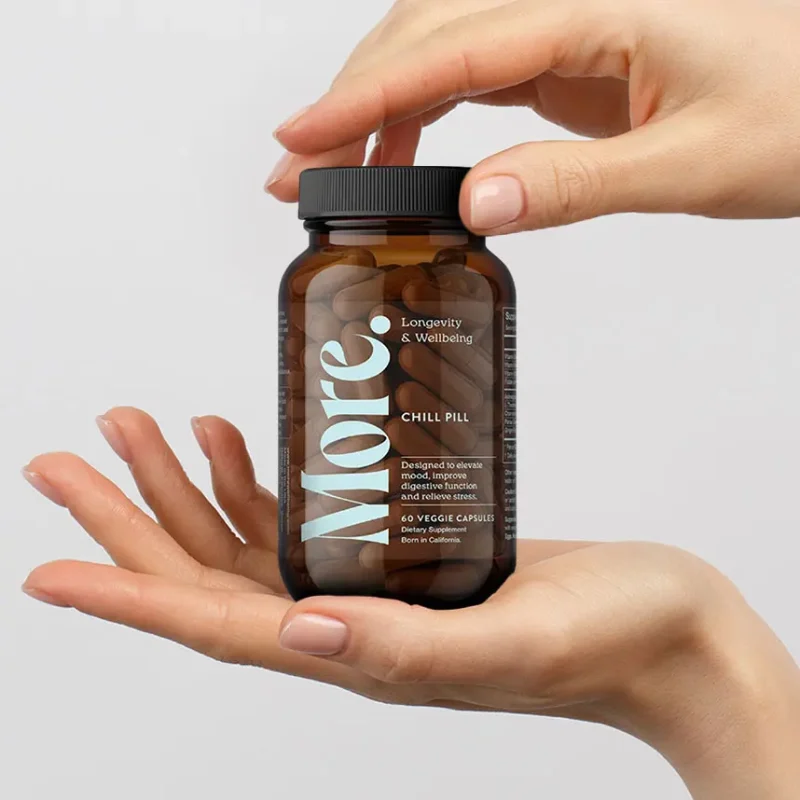
Chill Pill
Chill Pill
Price: $45.99
- +
Wellness Essentials Our Customers Love