Why Supplements Still Feel Stuck in the 1950s
Walk down the wellness aisle of almost any major retailer today, and you are met with an overwhelming wall of isolation



How does vitamin D support bone health?
What role does magnesium play in muscle function?
How do B vitamins contribute to energy metabolism?
Those questions have helped build an enormous body of scientific knowledge and continue to be essential today.
But they are only part of the picture.
Alongside traditional nutrient research, nutrition science is increasingly embracing systems-based approaches that explore how nutrients interact with one another and with the body’s biological networks. This includes metabolism, hormone signaling, immune function, the gut microbiome, cellular communication, and many other processes that work together to maintain health.
That shift reflects a simple reality.
The human body is not a collection of independent parts.
It is an integrated system.
Every moment, your nervous system, digestive system, immune system, endocrine system, cardiovascular system, and cellular metabolism are communicating with one another. Nutrients participate in these processes simultaneously rather than independently.
This is one reason why looking at a single ingredient can sometimes provide an incomplete picture.
A nutrient’s effect may depend on:
Take bone health as an example.
Calcium is essential, but it does not work alone. Vitamin D supports calcium absorption, vitamin K helps direct calcium into bone, magnesium participates in bone metabolism, adequate protein provides structural support, and regular weight-bearing exercise helps maintain bone strength. Looking at calcium by itself tells only part of the story.
Energy metabolism offers another example.
B vitamins play essential roles in converting food into cellular energy, but they are only one part of the process. Iron helps transport oxygen throughout the body, magnesium participates in hundreds of enzymatic reactions involved in energy metabolism, and healthy mitochondrial function depends on many nutrients working together rather than a single vitamin alone. Looking at a single B vitamin cannot fully explain how the body produces energy.
Simply increasing the amount of one ingredient does not always produce better results.
Sometimes the limiting factor is not the quantity of one nutrient.
It may be how efficiently the body absorbs it.
It may be the availability of other nutrients.
It may be an entirely different biological process.
Researchers often describe this broader perspective as systems nutrition or systems biology. It recognizes that health emerges from interactions across multiple physiological processes rather than from isolated nutrients acting independently.
After all, people do not consume isolated nutrients.
They consume foods, dietary patterns, and combinations of nutrients that continuously interact within highly complex biological systems.
This perspective also changes how formulas are designed.
Instead of asking, “How much of one ingredient can we include?”, a systems-based approach asks different questions.
Those questions recognize that thoughtful formulation is not simply about creating longer ingredient lists or bigger numbers on a Supplement Facts panel.
It is about understanding how ingredients work together to support the body’s normal biology.
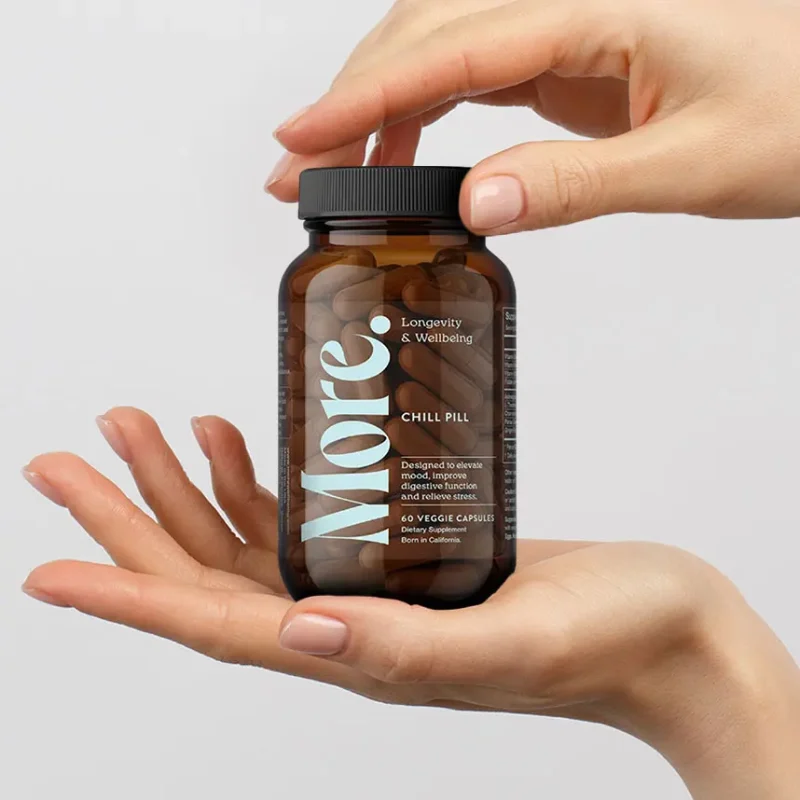
That philosophy guides every More. formula.
Rather than beginning with a single headline ingredient, we begin by asking which biological processes we want to support. From there, we select complementary ingredients, choose appropriate forms, consider how they work together, and formulate with meaningful amounts instead of simply pursuing the highest numbers on a label.
Nutrition will always benefit from studying individual nutrients.
But as science continues to evolve, it is becoming increasingly clear that understanding how nutrients interact within the body’s interconnected systems provides a more complete picture of human health.
Because better nutrition is not simply about individual nutrients.
It is about understanding the systems they support.
This article is intended for educational purposes only and should not be considered medical advice. These statements have not been evaluated by the Food and Drug Administration. More. products are not intended to diagnose, treat, cure, or prevent any disease.





©2026 More longevity & Wellbeing

Merchandise manufactured in a facility that
complies with good manufacturing practices

Merchandise manufactured in a facility that
complies with good manufacturing practices