The Supplement Label Trap: Why Bigger Numbers Can Be Misleading

The logic seems straightforward. If one formula contains 500 mg of an ingredient and another contains 100 mg, the larger number must be better. If one product contains 20 ingredients and another contains 10, the longer label must be more powerful.

But human biology is not a math contest.

Some of the most important decisions in supplement formulation are largely invisible to the untrained eye. The form of the ingredient. The supporting nutrients. The balance of the formula. The intended use. The body’s ability to absorb, utilize, and tolerate what it receives.

A supplement label can tell you what is inside a product. It cannot always tell you how thoughtfully the formula was designed.

Why We Naturally Focus on the Numbers

Consumers want to make informed choices.

However, because most people are not trained in nutrition, biochemistry, or formulation science, large numbers often become a shortcut for evaluating quality.

If Brand A contains 500 mg of an ingredient and Brand B contains 100 mg, it is easy to assume Brand A is superior.

Sometimes that may be true.

Many times, the answer is more complicated.

Without understanding the ingredient form, supporting nutrients, intended purpose, and overall formula design, the number alone tells only part of the story.

This is not an argument against higher doses.

Some nutrients, botanicals, and compounds have research supporting specific dosage ranges. The point is that dosage should be evaluated within context.

A meaningful dose is one that serves a clear purpose within a well-designed formula, not simply one that creates the biggest number on the label.

More is not automatically better.

Less is not automatically better.

Context matters.

What Most Labels Do Not Tell You

Many of the factors that influence how a supplement performs are not obvious from the front of the bottle.

1. Ingredient Form

Different forms of the same nutrient can behave differently in the body.

Magnesium is a common example.

Magnesium glycinate, magnesium citrate, magnesium malate, and magnesium oxide all provide magnesium, but they differ in absorption characteristics, tolerability, and intended use.

Looking only at the total milligrams does not reveal those differences.

2. Supporting Nutrients and Co-Factors

Nutrients rarely work alone.

Many biological processes depend on vitamins, minerals, enzymes, and other supporting compounds.

For example, amino acids such as L-tyrosine participate in pathways involved in the production of dopamine and norepinephrine. Certain B vitamins, including vitamin B6, folate, and vitamin B12, serve as important co-factors in many of the biochemical processes that support neurotransmitter synthesis and metabolism.

This illustrates why experienced formulators often think not only about individual ingredients, but also about the nutrients that help support their function.

An ingredient may appear impressive on a label, but without adequate nutritional support, its role within the body may be limited.

3. Formula Balance

Some products are designed around a single hero ingredient.

Others are designed around how multiple ingredients work together.

A systems-based approach seeks to support multiple interconnected processes simultaneously rather than relying on one ingredient alone.

This does not necessarily mean lower doses are always better.

It means that formulation decisions are made within the context of the entire formula and its intended purpose.

4. Long-Term Tolerability

Some ingredients may feel useful in the short term but may not be ideal for everyone at higher doses over time.

This is especially important with botanicals, adaptogens, stimulants, and ingredients that influence energy, stress response, mood, or sleep.

A formula that feels powerful on day one is not always the formula that feels balanced after weeks or months of daily use.

For some people, higher amounts of certain ingredients may contribute to overstimulation, digestive discomfort, sleep disruption, or a feeling of being pushed rather than supported.

That is why thoughtful formulation considers not only what an ingredient can do, but how the full formula may feel when used consistently.

The goal is not to overwhelm the body.

The goal is to support it in a way that feels steady, sustainable, and usable over time.

Why Formulators and Marketers Often Think Differently

Marketing rewards simplicity.

  • One ingredient
  • One promise
  • One big number

It is easy to understand and easy to communicate.

Formulation is more nuanced.

Experienced formulators must consider ingredient interactions, nutrient forms, tolerability, dosage balance, and whether the formula supports the intended outcome.

A great supplement is rarely the result of one impressive ingredient.

More often, it is the result of many thoughtful decisions working together.

What to Look for When Comparing Supplements

The next time you evaluate a supplement, look beyond the biggest number on the label and ask:

  • What form of the ingredient is being used?
  • Does the formula include supporting nutrients or co-factors?
  • Is the product designed around a clear purpose?
  • Is the formula balanced for long-term use?
  • Does the company explain why ingredients were selected?
  • Does the product avoid hiding behind vague proprietary blends?

The answers to these questions may tell you far more than a milligram amount alone.

The Bigger Picture

Quality is rarely determined by quantity alone.

The form matters. The balance matters. The supporting nutrients matter. The intended use matters. The long-term experience matters.

Wellness is not simply about putting more ingredients into a bottle. It is about understanding how those ingredients work together within the context of human biology.

At More. Longevity & Wellbeing, we believe formulation should be guided by purpose, balance, and biological context, not simply by the pursuit of bigger numbers.

The most important thing on a supplement label may not be the biggest number.

It may be the thinking behind the formula.

Choose you. Choose More.

Disclaimer

For educational purposes only. This information is not intended to diagnose, treat, cure, or prevent any disease. It is not medical advice.


Your Liver Is Working Harder Than You Think

A routine blood test flags an enzyme.
A doctor mentions fatty liver.
Or years of accumulated stress, alcohol, medications, and processed food finally show up as fatigue that will not lift, no matter how much you sleep.

By that point, the liver has been quietly managing a significant workload for a long time.

The question worth asking is not what to do when the liver is struggling.

It is what to do now, before it gets to that point.

What Your Liver Is Actually Doing

The liver is involved in hundreds of biological functions.

It:

  • Filters blood coming from the digestive tract before it circulates through the rest of the body

  • Metabolizes medications, hormones, and environmental compounds

  • Produces bile for fat digestion

  • Helps regulate blood sugar

  • Synthesizes proteins

  • Stores vitamins and minerals

It is also the primary site of detoxification, a word that is often used loosely but has a specific biological meaning.

Detoxification happens in two phases.

Phase I

Transforms fat-soluble compounds into intermediate forms through enzyme activity.

Phase II

Further processes those intermediates, making them easier to eliminate through bile, urine, or stool.

Both phases require specific nutrients to function properly.

When those nutrients are in short supply, the process may slow, intermediates may accumulate, and the liver may have to work harder to maintain balance.

This is the part many “detox” approaches overlook.

A juice cleanse does not support Phase II detoxification.
And a single-ingredient approach rarely supports the full process.

Real liver support requires nutrients that align with how these pathways actually function.

Glutathione and the Antioxidant Balance

One of the liver’s most important protective compounds is glutathione.

It plays a central role in:

  • Neutralizing oxidative stress

  • Supporting immune function

  • Participating in Phase II detoxification

The liver produces glutathione continuously, but demand can exceed supply.

Chronic stress, alcohol, environmental exposure, medications, and poor sleep can all increase that demand.

Supplementing glutathione directly can be challenging, as oral forms may be limited in how much reaches systemic circulation.

A more effective approach is to support the body’s own production.

N-Acetyl Cysteine (NAC)

N-Acetyl Cysteine (NAC) is a key precursor the body uses to produce glutathione.

It has been widely studied for its role in supporting glutathione levels and helping protect liver cells from oxidative stress.

Bile Flow and the Elimination Pathway

Detoxification is only part of the process.

Once compounds are processed, they need to be eliminated.

For many fat-soluble compounds, this happens through bile.

Bile is produced by the liver, stored in the gallbladder, and released into the digestive tract where it helps carry processed compounds out of the body.

When bile production or flow is less efficient, this pathway may become less effective.
Some compounds may be reabsorbed rather than eliminated efficiently.

Artichoke Leaf Extract

Artichoke Leaf Extract has been studied for its role in supporting bile production and flow, helping maintain this elimination pathway.

Protecting Liver Cells

The liver has a unique capacity to renew itself, but that process depends on adequate support.

Milk Thistle Extract

Milk Thistle Extract, standardized for its active compounds, has been studied for its role in supporting liver cell integrity and normal repair processes.

It also provides antioxidant support within liver tissue.

It works alongside NAC rather than duplicating its role.

  • NAC supports glutathione production and oxidative balance

  • Milk Thistle supports the structural integrity of liver cells

Together, they support the liver from complementary angles.

Supporting a Balanced Inflammatory Response

Liver health and inflammation are closely connected.

Supporting a balanced inflammatory response is an important part of maintaining overall liver function.

Turmeric Extract

Turmeric Extract has been widely studied for its role in supporting a healthy inflammatory response and overall tissue health.

Dandelion Root

Dandelion Root has a long history of traditional use in supporting digestion and elimination.

It also provides compounds that support the gut environment, which plays a role in how the body processes and eliminates certain byproducts.

The Methylation Foundation

One of the most overlooked aspects of liver function is methylation.

Methylation is a key biochemical process involved in the metabolism of hormones, neurotransmitters, and various compounds before elimination.

This process depends on B vitamins.

Specifically, forms that the body can use directly.

Methylcobalamin and Methylfolate

Methylcobalamin and methylfolate support these pathways without requiring conversion.

For individuals who do not efficiently convert certain vitamin forms, using pre-activated versions may help support these processes more effectively.

Without adequate support at this level, liver detoxification processes may be less efficient.

Why This Approach Is Different

Many liver supplements focus on one or two ingredients.

  • Milk Thistle alone

  • Or a blend of herbs without a clear functional structure

A more complete approach considers multiple pathways:

  • Glutathione support through NAC

  • Bile flow support through Artichoke

  • Cellular support through Milk Thistle

  • Inflammatory balance through Turmeric

  • Elimination support through Dandelion

  • Methylation support through methylated B vitamins

Each component plays a specific role.

Together, they support liver function as a system.

The Real Shift

Your liver does not need a dramatic cleanse.

It needs consistent, well-designed support.

Support that works with how detoxification actually happens.

Disclaimer

This content is for educational purposes only and is not intended to diagnose, treat, cure, or prevent any disease. Individual results may vary. Please consult your healthcare provider before starting any new supplement routine.

Tired All the Time? It Might Be a Nutrient Problem

You are sleeping enough.
You are eating reasonably well.
You are doing what you are supposed to do.

And yet by mid-morning, your focus is already slipping.
By afternoon, you are running on willpower and caffeine.
By evening, there is nothing left.

Most people assume this is just modern life. That exhaustion is the price of staying productive, raising a family, building something, or simply keeping up.

So they reach for another coffee, push through, and wait for the weekend to recover.

But what if the problem is not your schedule, your sleep, or your discipline?

What if your body is running low on the raw materials it needs to produce energy in the first place?

This Is Not a Motivation Problem. It Is a Depletion Problem

Energy is not something your body simply has or does not have.

It is something your body produces continuously at the cellular level using specific nutrients as building blocks.

When those nutrients are depleted, energy production slows down, regardless of how much you sleep or how well you eat.

Chronic stress is one of the fastest ways to drive that depletion.

It increases the demand for key nutrients like magnesium and B vitamins.
It elevates cortisol, which shifts the body away from recovery and toward constant output.

Over time, the body enters a state of low-grade depletion.

Everything feels harder.
Nothing fully restores you.

This is not a lack of effort.
It is a shift in biochemistry.

Why Stimulants Do Not Solve Fatigue

When energy drops, most people reach for stimulation.

Caffeine can help temporarily.
But it does not rebuild what stress has depleted.

It works by signaling the nervous system to stay alert, not by supporting the systems that actually generate energy.

That is why the cycle continues:

Temporary boost.
Followed by a crash.
Followed by more caffeine.

The underlying issue remains unchanged.

What Your Body Actually Needs for Real Energy

Supporting energy means supporting the systems behind it.

This includes stress response, neurotransmitter balance, mitochondrial function, and recovery.

Certain nutrients and compounds play a direct role in this process:

Adaptogens
Adaptogenic herbs help the body respond to stress more efficiently over time.

  • Rhodiola Rosea has been studied for reducing mental fatigue and improving cognitive performance under stress
  • Maca Root supports endurance, vitality, and mood balance

These do not force energy. They support resilience.

Amino Acids for Brain Function

  • N-Acetyl L-Tyrosine supports dopamine and norepinephrine production, which are directly linked to focus and motivation
  • L-Theanine promotes calm, focused alertness without sedation

Together, they support mental clarity without overstimulation.

Serotonin Support

  • 5-HTP supports serotonin pathways, which influence mood, emotional resilience, and sleep quality

When sleep improves, recovery improves.
When recovery improves, energy follows.

The Foundation of Cellular Energy

None of this works without foundational nutrients.

Energy is produced at the mitochondrial level, and that process depends on specific cofactors.

Methylated B Vitamins
Methylcobalamin and methylfolate support the conversion of food into usable energy.

These forms are used directly by the body, which matters because many people do not efficiently convert synthetic versions.

Magnesium Glycinate
Magnesium is involved in over 300 biochemical reactions, including ATP production.

It also supports nervous system regulation and sleep quality, both essential for recovery.

Vitamin C
From sources like sodium ascorbate and camu camu, vitamin C supports antioxidant defense and stress resilience.

Chronic stress increases oxidative demand, and vitamin C helps the body manage that load.

A Smarter Approach to Energy

Sustainable energy does not come from forcing the system.

It comes from supporting it.

Matcha Green Tea provides a good example of this difference.
It delivers natural caffeine alongside L-Theanine, creating a smoother energy curve without the sharp spike and crash associated with coffee.

The result is steady, usable energy rather than short-term stimulation.

Why This Matters

Fatigue is rarely caused by a single issue.

It is usually the result of multiple systems being under-supported at the same time:

  • Ongoing stress
  • Nutrient depletion
  • Poor recovery
  • Nervous system imbalance

Addressing only one piece rarely solves the problem.

This is why a systems-based approach matters.

Where More. Vitality Blend Fits

More. Vitality Blend was designed to support energy at its source.

Not by forcing stimulation, but by supporting the biological systems responsible for producing energy.

It brings together:

  • Adaptogens for stress resilience
  • Amino acids for cognitive support
  • Methylated B vitamins for cellular energy
  • Magnesium for recovery and nervous system balance
  • Matcha for smooth, sustained energy
  • Antioxidants for stress support

Each ingredient plays a specific role.
Together, they support a more stable energy foundation.

The Real Shift

If you feel tired all the time despite doing everything right, it is worth reconsidering the approach.

Energy is not something you push your way into.

It is something your body builds, when it has the right support.

Real energy is not about doing more.

It is about supporting what is already there.

Disclaimer
This content is for educational purposes only and is not intended to diagnose, treat, cure, or prevent any disease. Individual results may vary. Please consult your healthcare provider before starting any new supplement routine.

Menopause Support vs Symptom Relief: What Actually Matters

The goal is relief.

And relief matters.

But menopause is not a malfunction to be suppressed.
It is a natural transition the body is moving through.

There is a fundamental difference between managing what the transition feels like and supporting what your body is actually doing.

What the Transition Actually Involves

Menopause is one of the most significant biological shifts the body undergoes.

Estrogen and progesterone do not decline in a straight line.
They fluctuate, often unpredictably, before settling at lower levels.

Those shifts extend far beyond the reproductive system.

They influence:

  • Mood and sleep regulation
  • Stress response and nervous system tone
  • Inflammation and immune signaling
  • Nutrient metabolism and energy production
  • Bone density and cardiovascular health

Symptom relief addresses the surface.
Biological support addresses the foundation.

The Nervous System Is Central

One of the most overlooked aspects of menopause is the nervous system.

Progesterone and its metabolites support GABA activity, the primary pathway responsible for calming the brain.

As progesterone declines, that calming influence weakens.

What follows is not just occasional anxiety.
It is a system that becomes more reactive, less resilient, and slower to return to a resting state.

This is why many women describe feeling:

  • Wired but exhausted
  • Restless at night but fatigued during the day
  • Unable to fully switch off

Supporting the GABA pathway may help reinforce inhibitory signaling and support a calmer nervous system state.

This is not suppression.
It is support.

Support, Not Suppression: The Botanical Logic

Hormonal balance during menopause is not one target.
It is a dynamic process involving multiple systems and feedback loops.

The approach here is to support how the body regulates itself:

  • Chasteberry extract: Supports hormonal signaling through the pituitary gland.
  • Black cohosh extract: One of the most studied botanicals for temperature regulation and mood support.
  • Red clover: Provides phytoestrogens to offer gentle support as natural levels decline.
  • Passionflower extract and lemon balm extract: Support GABA activity to promote relaxation and sleep quality.
  • Wild yam and dong quai root extract: Traditionally used to support systemic balance during periods of change.
  • Hops cone extract: Supports relaxation and sleep through calming pathways.

These ingredients do not replace hormones.
They support how the system functions.

The Nutritional Foundation

What often goes unaddressed in menopause support is the nutritional layer.

The More. Menopause Support Blend includes methylated B vitamins, including methylcobalamin and methylfolate, which play a central role in:

  • Neurotransmitter production
  • Energy metabolism
  • Methylation pathways

These processes are foundational to how the body adapts to hormonal change.

Some individuals have genetic variations that affect how efficiently they convert certain forms of B vitamins. Using methylated forms supports bioavailability without requiring additional conversion.

If the foundation is not usable, the rest of the formula is limited.

Why This Distinction Matters

Many menopause products are designed to make the experience more tolerable.

That has value.

But tolerating a transition and being supported through it are not the same.

Menopause is not something to get through.
It is something the body adapts to.

The difference is in how you support it.

The More. Menopause Support Blend was built around that idea.
Not to suppress what the body is doing, but to support it more intelligently.

Explore the More. Menopause Support Blend.

Disclaimer

This content is for educational purposes only and is not intended to diagnose, treat, cure, or prevent any disease. Individual results may vary. Please consult your healthcare provider before starting any new supplement routine.

The Longevity Industry Is Booming. But Are We Asking the Right Questions?

The desire to live longer and feel better is understandable. People are looking for more energy, more clarity, better resilience, and a healthier future. But as the category expands, an important question remains: what actually supports long-term health in a meaningful way?

Because longevity is not built through a single molecule, a trend, or a shortcut. The body does not operate through isolated systems, and health rarely comes from pushing one pathway harder.

The Problem With the Modern Longevity Conversation

Much of the longevity industry is built around intensity: more stimulation, more tracking, more stacking, more interventions.

Sometimes it begins to sound less like health and more like human optimization at all costs.

But biology is not software.

The nervous system matters. Sleep matters. Digestion matters. Stress regulation matters. Metabolic stability matters. And these systems constantly interact with one another.

You cannot separate energy from stress, cognition from sleep, or inflammation from metabolic health. The body works as a network. That is why a systems-based approach matters.

What Systems-Based Support Actually Means

A systems-based approach does not mean trying to do everything at once. It means supporting the core systems that shape how people feel every day:

  • Stress response
  • Energy metabolism
  • Digestion
  • Sleep quality
  • Cognitive function
  • Recovery
  • Hormonal balance
  • Nervous system regulation

Because the body does not experience symptoms in isolation. Low energy may be connected to stress. Poor sleep may affect metabolism and cognition. Digestive health influences nutrient absorption, inflammation, and even mood through the gut-brain axis.

When one system struggles, others often compensate. That is why long-term wellness is rarely about chasing a single ingredient or forcing a short-term outcome. It is about supporting how the body functions as an interconnected whole.

Longevity Is Not Just About Lifespan

Living longer is not automatically the same as living well. The real question is: how do you support quality of life over time?

Stable energy, mental clarity, healthy movement, resilience under stress, recovery, emotional balance, cognitive function, and metabolic flexibility are the foundations people actually feel in daily life.

And many of them are shaped by ordinary things that are often overlooked in modern wellness conversations:

  • Nutrition
  • Movement
  • Sleep
  • Stress regulation
  • Social connection
  • Consistency

Not every solution has to feel extreme to matter.

The Supplement Industry Often Confuses Complexity With Intelligence

Consumers today face an overwhelming amount of information: hundreds of ingredients, aggressive marketing claims, complicated protocols, and supplement stacks with dozens of capsules per day.

Sometimes complexity is presented as sophistication. But more ingredients do not automatically create better outcomes. And high stimulation is not the same thing as support.

A formula should have structure. Ingredients should work together. The body should be supported, not pushed. That means considering:

  • Bioavailability
  • Nervous system balance
  • Nutrient synergy
  • Recovery capacity
  • Gut-brain interaction
  • Long-term sustainability

Real wellness is not built through constant physiological pressure.

Why Regulation Matters More Than “Hacking”

The body is always trying to maintain balance. That balance affects hormones, sleep cycles, mood, energy production, immune response, and cognitive performance.

When stress becomes chronic, systems begin compensating rather than functioning efficiently. This is where many people start feeling:

  • Wired but exhausted
  • Mentally foggy
  • Restless at night
  • Dependent on stimulants
  • Inflamed
  • Burned out

Longevity is not simply about activating pathways harder. Sometimes the deeper goal is helping the body regulate more effectively again.

Calm and energy are not opposites. Recovery is not weakness. And sustainable energy should not feel borrowed.

The Future of Wellness May Be Simpler Than People Expect

As the wellness industry evolves, consumers are becoming more educated. People are asking better questions.

Not just:
“What ingredient is trending?”

But:
“How does this formula actually support the body?”

Consumers increasingly want:

  • Clear formulations
  • Thoughtful ingredient selection
  • Better forms
  • Systems-based support
  • Long-term sustainability
  • Less hype
  • More clarity

That shift may ultimately be healthier for the industry itself.

A More Grounded Approach to Longevity

There is nothing wrong with wanting to feel better as you age. The desire for vitality is deeply human. But longevity should not become another form of exhaustion.

Health is rarely built through extremes. More often, it is built through consistency, recovery, and supporting the body intelligently over time.

Not chasing every trend. Not forcing biology. Not overwhelming the system.

At More. Longevity & Wellbeing, we believe real wellness starts with supporting the systems that shape how people actually live and feel every day:

  • Energy
  • Stress response
  • Sleep
  • Digestion
  • Recovery
  • Cognitive clarity

Not as isolated categories, but as interconnected parts of human biology.

Because longevity is not about pushing the body harder. It is about supporting it more intelligently over time.

Choose you. Choose More.

For educational purposes only. Not medical advice.

Why Supplements Still Feel Stuck in the 1950s

A bottle of calcium.
A bottle of zinc.
A bottle of vitamin D.
A bottle for energy.
A bottle for stress.
A bottle for sleep.

To the consumer, this can look like variety.

But to anyone who understands human biology, it reveals a deeper problem: much of the supplement industry still trains people to think about the body in isolated parts.

One symptom.
One ingredient.
One bottle.

But biology does not work in straight lines.

It works in loops.

The nervous system talks to the gut. The gut talks to the immune system. Hormones influence sleep, metabolism, mood, and energy. Nutrients often depend on one another to be absorbed, activated, and used properly.

So why does the wellness aisle still look so fragmented?

To understand the single-ingredient myth, we have to look at how the industry got here, why isolated thinking became so common, and why true longevity requires a more structured approach.

1. An Ancient Truth and a Modern Separation

The idea that the human body operates as an interconnected system is not new.

In fact, systems-based thinking is older than the single-ingredient supplement model.

For thousands of years, traditional medical systems viewed health as a relationship between different parts of the body, not as a collection of disconnected symptoms. Ayurveda, Traditional Chinese Medicine, early Greek philosophy, and other long-standing traditions all recognized that what appears on the surface may be connected to deeper internal patterns.

Modern science has moved in a similar direction.

In the 20th century, biologist Ludwig von Bertalanffy helped formalize General Systems Theory, which emphasized that living organisms cannot be fully understood by studying isolated parts alone. The whole has patterns, properties, and relationships that individual pieces do not explain by themselves.

Later, systems biology expanded this idea even further, looking at how genes, proteins, cells, organs, and biological networks interact. Today, systems medicine continues to explore how the nervous system, gut microbiome, immune system, metabolism, and hormones influence one another.

In other words, the body has always been connected.

The problem is that much of the supplement aisle still behaves as if it is not.

2. How the Single-Ingredient Model Became the Default

The single-ingredient model did not appear by accident.

When scientists first identified and isolated vitamins, it was a major breakthrough. Nutrients like vitamin C, vitamin D, and B vitamins helped explain and prevent serious deficiency-related conditions.

That discovery mattered.

But over time, a useful scientific breakthrough became a simplified commercial model.

One nutrient became linked to one outcome:

• Calcium became “for bones”
• Vitamin C became “for immunity”
• Magnesium became “for relaxation”
• Caffeine became “for energy”

This made supplements easier to market.

It also made them easier to manufacture.

From a production standpoint, single-ingredient products are often simpler to source, test, scale, and sell. A basic single-nutrient capsule is easier to explain than a formula designed around nutrient interaction, bioavailability, absorption, and system-level support.

But easier does not always mean better.

The body does not ask, “What is the hero ingredient?”

The body asks:

Can I absorb this?
Can I activate it?
Can I use it?
Does it work with the other systems around it?

That is where isolated thinking begins to fall short.

3. The Economics of Simplicity

There is another reason the single-ingredient model became so dominant.

It is efficient.

A single generic raw material is often easier to source, easier to test, easier to encapsulate, and easier to scale. It also makes for simpler front-label messaging.

But building a thoughtful, systems-based formula is more complex.

When you combine fruiting body mushroom extracts, bioavailable mineral forms, methylated B vitamins, adaptogens, amino acids, botanicals, and prebiotic fiber, the formulation has to be designed with much more care.

You have to think about:

• Taste
• Texture
• Stability
• Ingredient compatibility
• Dosing
• Absorption
• Purpose

That level of formulation is harder.

But it is also more aligned with how the body actually works.

This is why transparency matters. Some formulas rely on proprietary blends, where exact ingredient amounts are hidden from the consumer. Others are built around a well-known ingredient on the front of the label, even if the full formula lacks meaningful structure.

The issue is not that single ingredients are always bad.

The issue is that single-ingredient thinking became the default way people were taught to understand wellness.

And the body is not that simple.

4. The Biological Reality: Synergy Matters

Your body is an ecosystem.

When you take a single ingredient without considering the system around it, you may be giving the body the bricks while forgetting the mortar, the tools, and the blueprint.

Take bone health as an example.

For decades, calcium was treated as the obvious answer. But bone health is not only about calcium.

The body also needs:

• Vitamin D3 to support calcium absorption
• Magnesium to support vitamin D activation and mineral balance
• Vitamin K2 to help support healthy calcium direction in the body

Bone support is not a single-nutrient conversation.

It is a system.

The same is true for stress and energy.

Chronic stress does not only affect mood. It can influence sleep quality, digestion, blood sugar balance, hormonal patterns, focus, and overall resilience.

That is why a simple “energy booster” or a single calming ingredient may not always address what is happening underneath.

Sometimes the body does not need to be pushed harder.

It needs support across the systems that are already working overtime.

5. From Fuller Cabinets to Smarter Routines

The modern consumer is exhausted.

They are tired of managing a cabinet full of disconnected bottles, navigating overlapping claims, and playing amateur formulator every morning.

A capsule for this.
A powder for that.
Another bottle added every time a new symptom appears.

The result is not always a better routine.

Often, it is confusion.

People are left trying to understand whether ingredients overlap, compete, duplicate, or actually belong together.

This is where the supplement industry has made wellness feel more complicated than it needs to be.

Not because people need less support.

But because they need more structure.

6. The Future Is a Return to What Biology Always Was

The future of wellness is not about creating more isolated products.

It is about creating formulas that make biological sense.

A systems-based approach asks better questions.

Not just:

“What ingredient is popular right now?”

But:

• What process are we supporting?
• What systems are involved?
• What nutrients work together?
• What form is most usable?
• What does the body actually need to do its job?

This is the difference between chasing symptoms and supporting the process underneath them.

It is also the difference between random supplementation and a smarter routine.

At More. Longevity & Wellbeing, this is the foundation of how we formulate.

We do not believe the body is a collection of isolated problems.

We believe it is an intelligent, connected system that deserves intelligent, connected support.

That means:

• No proprietary blends
• No unnecessary fillers
• No hidden amounts
• No formulas built around one trendy hero ingredient

Just thoughtful, systems-based support designed with bioavailability, synergy, and purpose in mind.

Because the goal was never to have a fuller cabinet.

The goal is a smarter routine.

Clarity in the Aisle: Common Questions

If I have a nutrient deficiency, shouldn’t I just take a high-dose single nutrient?

If you have a diagnosed deficiency, that is something to discuss with a qualified healthcare provider.

More. was not built as an acute intervention. It was built for long-term support.

Longevity is not a crisis model. It is a process. The body does not rely on isolated nutrients alone. It relies on biological loops, cofactors, absorption pathways, and balance between systems.

For example, minerals and vitamins often work best when they are supported by the right forms, cofactors, and complementary nutrients. That is why our formulas are designed around synergy, not isolated megadoses.

The goal is not just to take one nutrient.

The goal is to support the system around it.

Why not just buy a low-cost single mineral or vitamin from the drugstore?

Price per bottle does not always tell the full story.

Supplement quality depends on form, absorption, dose, purpose, and how the ingredient works within the full formula. Some lower-cost minerals may use forms that are less bioavailable or harder for some people to tolerate.

At More., we focus on thoughtful ingredient forms, including methylated and chelated nutrients where appropriate, and formulas designed to work as a structured system.

The most important question is not only, “How much does this cost?”

It is also, “What form is it in, how well is it used by the body, and does it make sense within the formula?”

Why not build my own routine with single-ingredient supplements?

You can. Some people prefer that approach.

But for many people, a supplement cabinet becomes complicated quickly. Multiple single bottles can create overlap, redundancy, or combinations that do not work as well together as people assume.

More. was created to make wellness more structured.

Instead of asking customers to manage many disconnected bottles, we build formulas with complementary ingredients that support a specific biological system or need.

The goal is not to remove personalization.

The goal is to remove unnecessary guesswork.

Is a higher percentage of the Daily Value always better?

Not always.

More is not automatically better. Stronger is not always smarter.

Some nutrients have a point where the body can only use so much at one time. Very high amounts are not always necessary, and in some cases may not be the most thoughtful approach for daily wellness.

At More., we focus on purposeful, evidence-informed dosing and ingredient synergy.

We care about what the body can actually use, not just what looks impressive on a label.

Why does transparency matter?

Transparency matters because it allows customers to understand what they are taking.

More. does not use proprietary blends because we believe people deserve to know what is in a formula and why it is there.

When a product hides ingredient amounts inside a proprietary blend, it becomes difficult to evaluate the formula clearly. You may see a long list of impressive ingredients without knowing whether each one is included in a meaningful amount.

At More., we believe integrity starts with clarity.

No proprietary blends.

No unnecessary mystery.

Just structured formulas built with purpose.

Why should a retailer consider More. instead of another legacy supplement brand?

Many legacy supplement brands compete through price, trend cycles, and large SKU counts. That can create overlap on the shelf and confusion for the customer.

More. takes a different approach.

We are not trying to add more noise to the supplement aisle. We are creating a clearer structure for how customers build a wellness routine.

Each formula has a defined role. Each product supports a specific system or need. Together, the line helps customers move from disconnected purchases toward a routine they can understand and maintain.

That is where loyalty is built.

Not through more bottles.

Through more clarity.

Choose you. Choose More.

Disclaimer

For educational purposes only. Not medical advice.

What Mushroom Supplement Labels Don’t Always Explain

These terms matter. But on their own, they do not tell the full story.
At More., we believe mushroom quality should be easier to understand. This guide breaks down what mushroom supplement labels do not always explain—and what to actually look for when choosing a mushroom blend.

Fruiting Body vs. Mycelium: What’s the Difference?

One of the first things to look for on mushroom supplement labels is whether a product uses fruiting body extracts or mycelium-on-grain.
The fruiting body is the visible part of the mushroom, traditionally used in many preparations.
Mycelium is the root-like network. Some supplements use mycelium grown on grain, then process the entire material together, which can include both fungal material and residual grain.
At More., we use fruiting body mushroom extracts and do not use mycelium-on-grain ingredients.

Beta-Glucans in Mushroom Supplements: What the Numbers Mean

Beta-glucans are naturally occurring compounds found in mushrooms and are often used as a quality marker.
But a single number does not explain everything.
Levels can vary depending on testing method, mushroom species, and supplier. A higher percentage does not automatically reflect how a finished formula performs as a whole.
At More., we do not define quality by a single metric. Our approach considers overall extract integrity, purity, consistency, and how the ingredients function together within the blend.

Mushroom Extract Ratios (10:1, 20:1): Are They Reliable?

You may see mushroom supplements labeled as 10:1, 20:1, or higher.
These ratios can sound powerful, but they are not standardized across suppliers. A 10:1 extract from one source is not necessarily comparable to another.
The ratio alone does not explain what remains in the final extract or how it functions within a complete formula.
At More., we select ingredients based on quality, consistency, and how they perform within the full blend, not on ratio claims alone.

Standardized Mushroom Extracts: What It Really Means

Standardization adjusts an ingredient to contain a specific compound.
That can be useful. But mushrooms are naturally complex and contain a broader range of compounds, which is why we focus on full-spectrum mushroom extracts rather than isolated targets.

Mushroom Supplement Quality: Why Sourcing Matters

Mushroom supplement labels may tell you the species, but often not the supplier, handling, or batch consistency.
Those details matter.
We work with experienced suppliers and select ingredients based on defined quality standards, consistency, and overall extract integrity.

Why the Full Mushroom Formula Matters

A mushroom supplement should not be judged by one number, one ratio, or one buzzword.
It should be evaluated based on how the formula comes together.
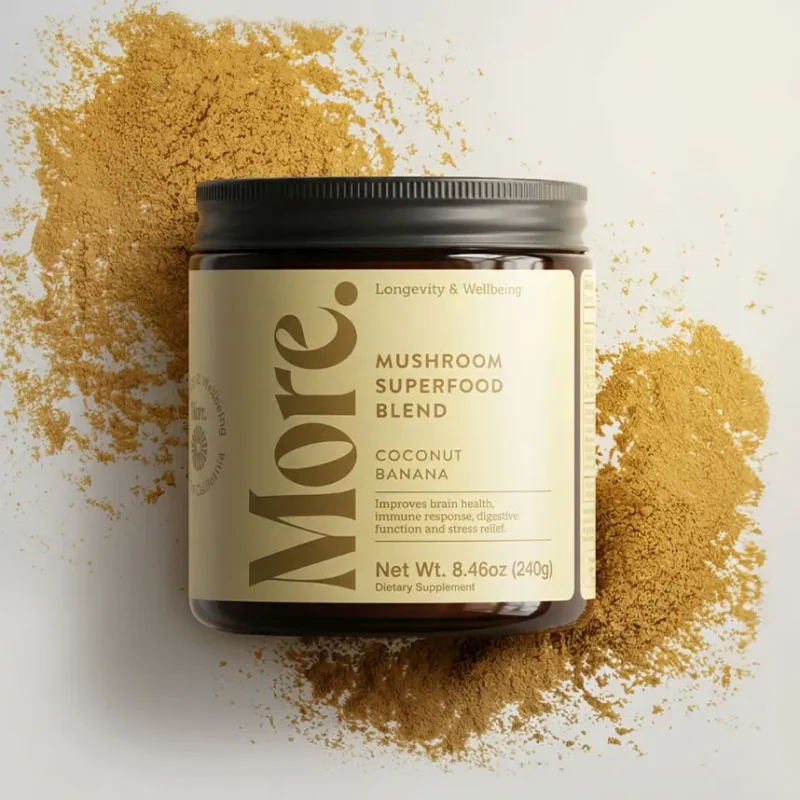
This is the approach behind our Mushroom Superfood Blends: each ingredient is selected not in isolation, but for the balance of the whole.
The goal is not to chase a single impressive claim.
The goal is to create a functional, balanced formula that fits into real life.

What to Look for on Mushroom Supplement Labels

When choosing a mushroom supplement, ask:
• Does it use fruiting body extracts?
• Does it avoid mycelium-on-grain?
• Does the brand explain its testing standards?
• Is the focus on one number, or the full quality picture?
• Does the formula make sense as a whole?

Final Thoughts: Understanding Mushroom Supplement Labels

Mushroom supplement quality is not just what is printed on the front of the label.
It is sourcing, ingredient quality, testing, formulation, and transparency.
At More., clarity is part of quality.
Because what you take should make sense.

Disclaimer

For educational purposes only. Not medical advice.

Same Supplement, Different Results: What’s Really Going On

You feel mostly the same as before.
Same product, same dose, same schedule.
So what is actually going on?
This is one of the most common and most frustrating experiences people have with supplements and the answer has nothing to do with willpower or patience.
It comes down to three things that vary significantly from person to person and that most supplement brands never talk about.
At More. we built our entire formulation philosophy around this reality.

Your Genetics Are Running a Program in the Background

Your genetic makeup influences how you absorb nutrients, how quickly your body metabolizes certain compounds, and which biological pathways are running efficiently versus sluggishly.
One of the most well known examples is a genetic variation called MTHFR which affects how the body processes certain B vitamins.
People who carry this variation cannot efficiently convert the synthetic forms of B12 and folate found in most supplements into the forms their cells can actually use.
This is exactly why More. uses methylcobalamin and methylfolate across every formula in our line rather than the cheaper synthetic forms used by most brands.

We formulate for the full range of human biology not just the people whose genetics happen to work well with the most common available ingredients.
Beyond B vitamins, genetic variation affects how men and women alike metabolize adaptogens, botanicals, and other active compounds.
Some people are fast metabolizers. Others are slow.
Neither is wrong. They are just different.
And a formula built with that in mind uses ingredients in bioavailable forms at meaningful doses so that a wider range of people can actually benefit.

Your Gut Is the Gatekeeper Nobody Talks About

You can swallow the highest quality supplement on the market and still absorb very little of it if your gut is not in a position to do its job.
Nutrient absorption happens primarily in the small intestine and the health of that environment determines how much of what you take actually makes it into your bloodstream.
This applies equally to men and women.
People who have a history of antibiotic use, chronic stress, poor sleep, or diets low in fiber often have gut environments that are working against absorption rather than supporting it.

This is why two people taking identical supplements can have very different experiences even after months of consistent use.
This is why More. includes prebiotic fiber in our powder formulas.
Inulin from chicory root feeds beneficial gut bacteria and supports the intestinal environment that makes absorption possible in the first place.
We included it because absorption is part of the formula whether most brands think about it that way or not.

Your Nervous System Is Either Working With You or Against You

Chronic stress does not just make you feel bad.
It actively depletes key nutrients, particularly magnesium and B vitamins, at an accelerated rate.
It also redirects the body’s resources toward cortisol production which disrupts hormonal balance and undermines recovery in both men and women.
A person under significant chronic stress may be burning through the very nutrients their supplement is providing faster than the supplement can replenish them.
Meanwhile someone with a more regulated nervous system and lower baseline cortisol will retain and utilize those same nutrients far more effectively.
This is why stress support is not a separate category at More.

It is woven into our formulas.
Our Relax Blend directly addresses cortisol and nervous system regulation with Ashwagandha, GABA, L-Theanine, and a botanical calming stack.
Our Vitality Blend includes adaptogens alongside mood and energy support.
Our Mushroom Coffee Superfood Blend builds stress resilience at the cellular level through Ashwagandha and seven functional mushroom extracts.
We do not treat stress support as a women’s issue or a men’s issue.
We treat it as a human issue because cortisol does not discriminate.

Your Experience Is Yours

Your supplement experience is personal.
What works powerfully for someone else may work differently for you and that is not a failure of the product or of you.
It means the full picture matters including what your genetics might be doing, how your digestion is functioning, and what your stress load is doing to your baseline.
Most supplement formulas are built for a hypothetical average person.
But biology is not average.

It is individual, contextual, and shaped by years of lived experience.
At More. we take that seriously.
Every ingredient is chosen in a form the body can actually use.
Every formula addresses multiple systems rather than a single pathway.
And every product is third party tested so that what is on the label is what is in the bottle.
We build supplements for real human biology because that is the only kind that exists.

Disclaimer

For educational purposes only. Not medical advice.

Magnesium Stearate: What It Means for Supplements

A small ingredient most people never question

Turn over almost any supplement label and you may find an ingredient called magnesium stearate.
• It is not there for nutrition.
• It is not there for your biology.
• It is there for manufacturing.

Magnesium stearate is commonly used as a flow agent, helping powders move smoothly through machines during production. It prevents ingredients from sticking to equipment and allows capsules and tablets to be produced efficiently and consistently.

From a manufacturing standpoint, it serves a purpose.
From a formulation standpoint, it raises a more important question:
Is everything in your supplement there to support your body or to support the manufacturing process?

Why it is used so widely

Modern supplement production often prioritizes speed, scalability, and uniformity.
Flow agents like magnesium stearate reduce costs, improve speed, and ensure consistency at scale, which is exactly why the industry adopted them so widely.

Its presence does not automatically make a supplement bad.
But it does reflect a certain formulation philosophy.

The nuance most conversations miss

The conversation around magnesium stearate is often oversimplified.
Some claim it is harmful.
Others say it is irrelevant.
The truth is more measured.

Current evidence suggests that magnesium stearate is generally considered safe in the small amounts used in supplements.
However, safety is not the only lens that matters.
For many consumers, the question has evolved from:
Is this safe?
to
Is this necessary?

When formulation becomes the differentiator

Not all supplements are built the same way.
Some are designed primarily for manufacturing convenience.
Others are designed with ingredient purpose and synergy in mind, even if that requires more complexity in production.
This is where formulation philosophy matters.

A more intentional approach asks:
• Can we create this without unnecessary additives?
• Can every ingredient serve a functional role?
• Can we prioritize the body over the process?

These questions do not always lead to the easiest path.
But they lead to a more thoughtful one.

What magnesium stearate free actually means

When a supplement is made without magnesium stearate or synthetic flow agents, it reflects a deliberate choice:
• Slower, more precise manufacturing
• Greater attention to ingredient handling
• A focus on minimizing non functional additives

It does not automatically make a product superior.
But it signals intent.
And in today’s wellness landscape, intent matters.

The bigger shift happening in wellness

Consumers are paying closer attention.
They read labels.
They compare ingredients.
They ask better questions.
Not just:
What does this contain?
But:
Why does it contain it?
This shift is moving the industry toward greater transparency and accountability.

A more grounded way to think about it

Magnesium stearate is not the core of the conversation.
It is a signal.
A signal of how a product was made.
A signal of what was prioritized.
A signal of whether every ingredient has a purpose.

Because at the end of the day:
Quality is not just about what is included.
It is also about what is not.

Where we stand

At More. Longevity & Wellbeing, we take a simple approach:
• No fillers.
• Nothing unnecessary.
• Every ingredient is selected for a purpose.

Not because clean labels are marketable,
but because formulation should be guided by the body, not by manufacturing convenience.

Final thought

The goal is not to create fear around ingredients.
It is to create clarity.
Because when you understand how something is made,

you make different choices.
And over time, those choices shape how you feel.
Choose you. Choose More.

Disclaimer

For educational purposes only. Not medical advice.

Your Cart
Add $50 more to your cart to unlock Free U.S. Shipping!
$100
Wellness Essentials Our Customers Love
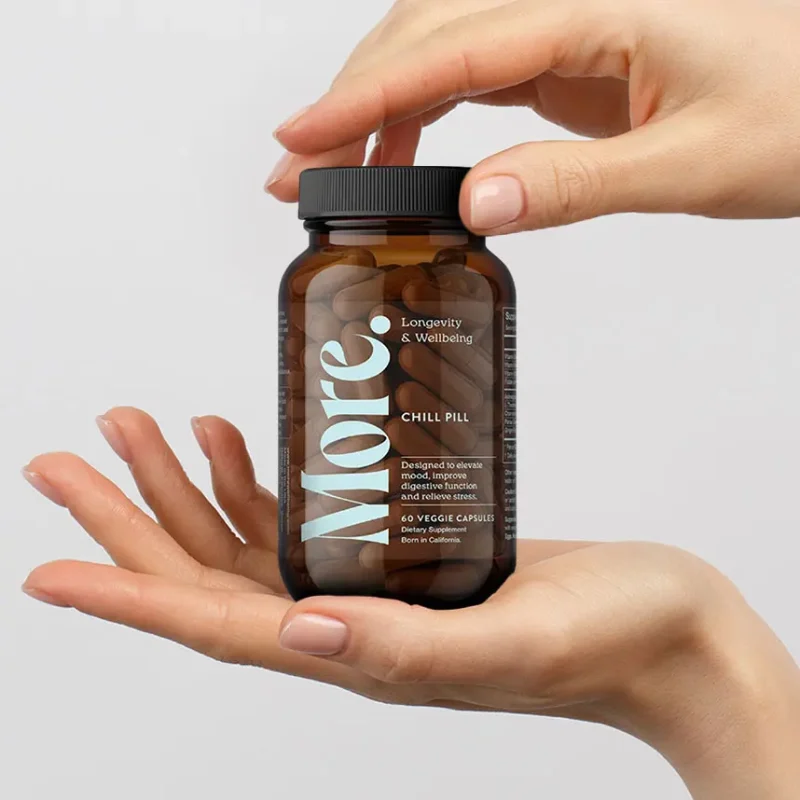
  • Chill Pill
    Ashwagandha, Panax ginseng & L-theanine for stress relief
    $45.99
    +Add